First in Flight
A cloudy visit to the Wright Brothers National Memorial on North Carolina's Outer Banks

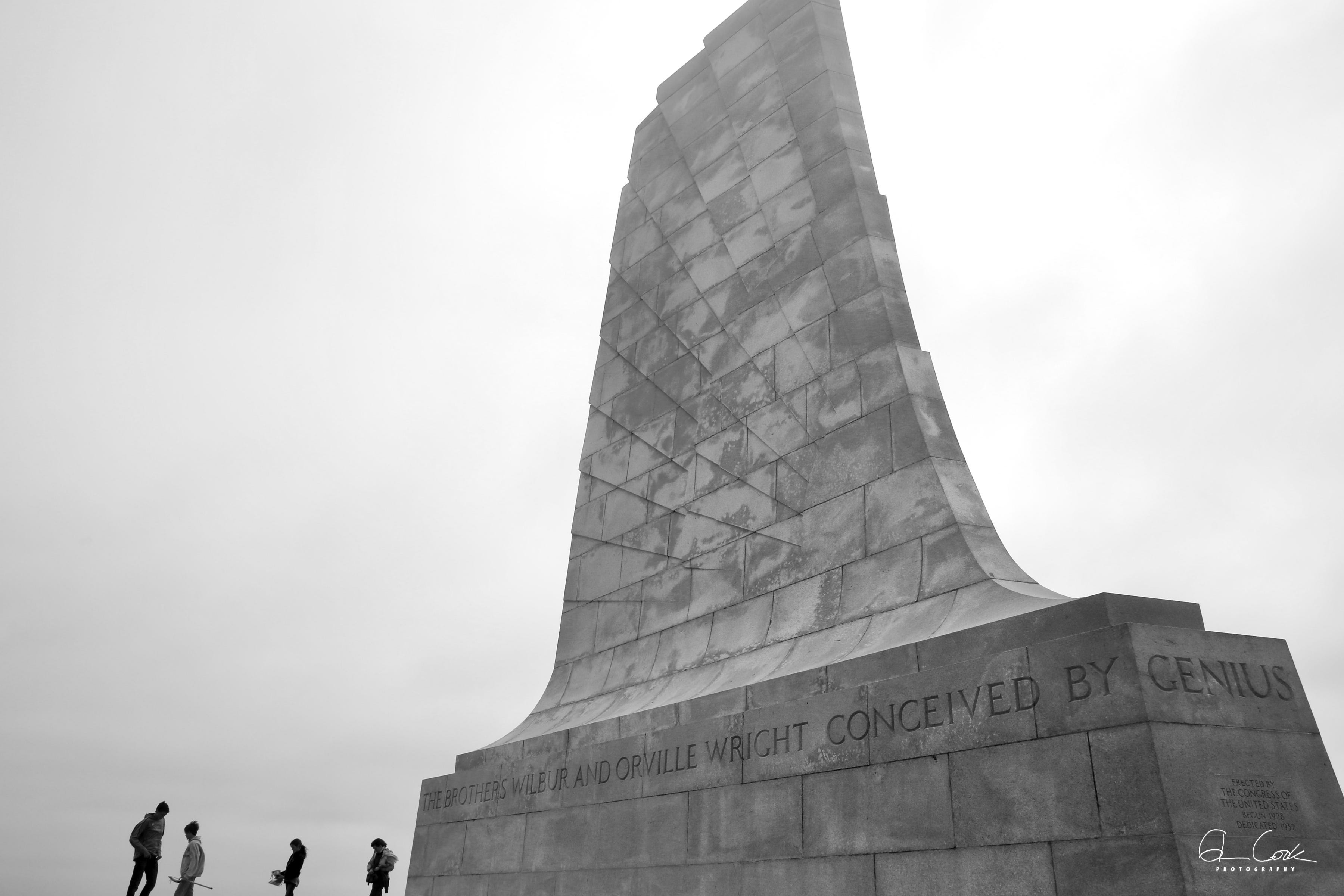
I’m not, generally speaking, a beach person.
Perhaps that comes from a childhood on the Texas Gulf Coast, where I grew up only a mile or so from the Gulf of Mexico, amid the threat of summer tropical storms and hurricanes. Perhaps it comes from the petrochemical plants that surrounded my hometown and muddied the waters, turning the sand a shade of dark gray and brown.
Covering “Tackle Time,” the annual summer purging of the ocean, during my first job didn’t help. Near the entrance to the Texas City Dike, the largest manmade pier in the U.S., deep sea fishermen would display their catches in a contest to see who could get the largest shark, stingray or sea creature. Holding my nose while taking photos of these catches on a steamy July day was a necessary community newspaper job I didn’t ask for and didn’t want.
After moving to North Carolina in the mid 1990s, I grew to have an appreciation for the Outer Banks, the summer destination for families on the East Coast. Every two to three years, Jill and I scraped together our pennies, rented a house, and took the kids to Duck, N.C., for several days.
Generally speaking, we would stick close to the beach, occasionally venturing out for tours. The kids enjoyed Jockey’s Ridge State Park in Nags Head, which has the largest sand dune in the eastern United States, and climbing the lighthouse in Currituck to the north. Being a history buff, I always encouraged them to go to the Wright Brothers National Memorial in Kill Devil Hills.
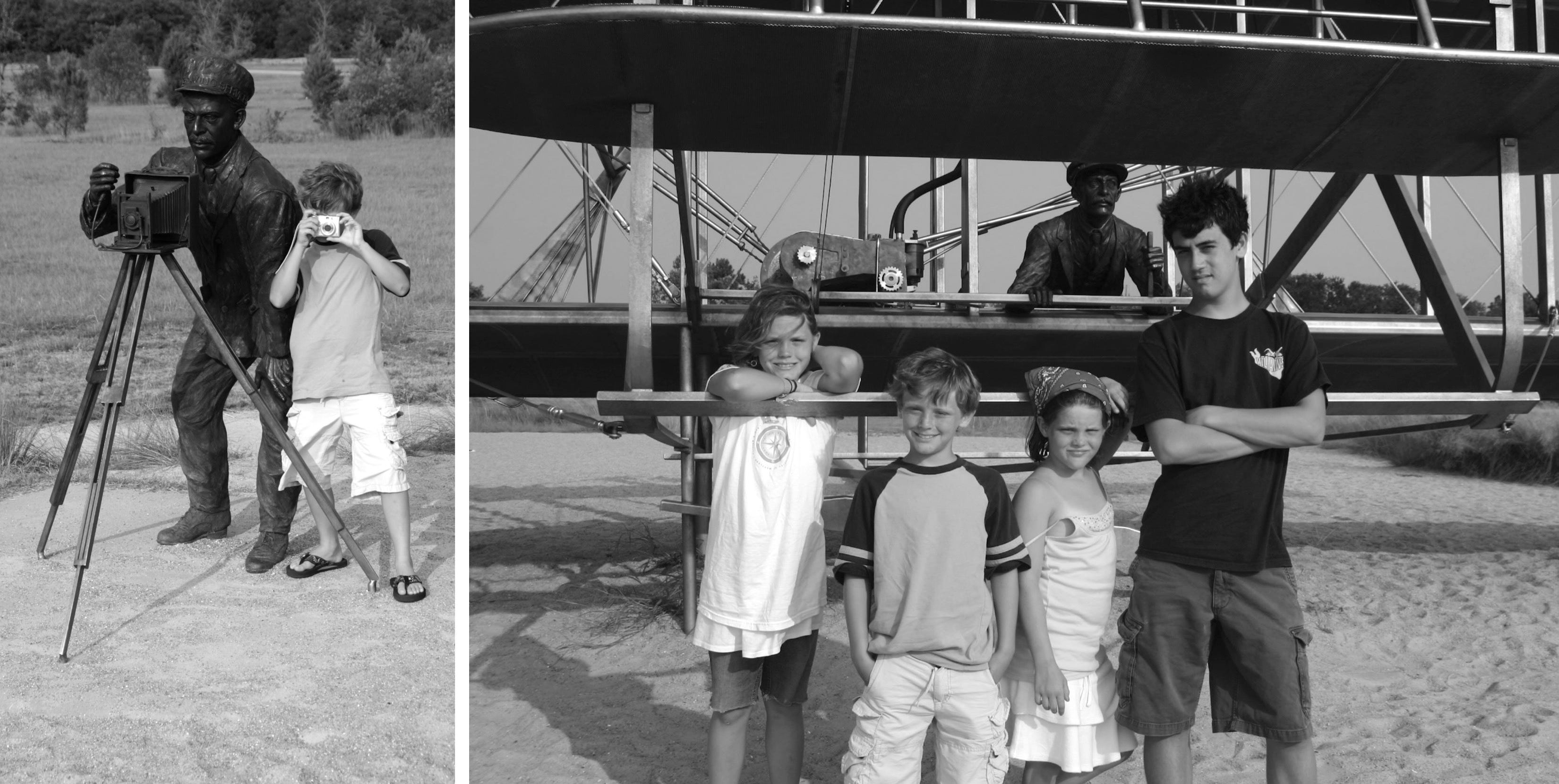
We went to the memorial once with my mom soon after my dad died in 2007. The kids posed in front of a statue of the plane that represented the first successful powered flight in history. Ben goofed around, posing with his camera next to a statue of John T. Daniels, who took the famous photograph of the first flight.
And that was pretty much it. After a few minutes, they wanted to head on to the dunes. A number of years later, Jill and I went back to the Outer Banks as a couple, and I decided to tour the memorial on my own.
Based in Dayton, Ohio, brothers Wilbur and Orville Wright built and sold bicycles in the late 19th century while pursuing their dream of human flight. In 1900, they started testing unpowered gliders on the remote Outer Banks, using information from the U.S. Weather Bureau about the area’s steady winds.
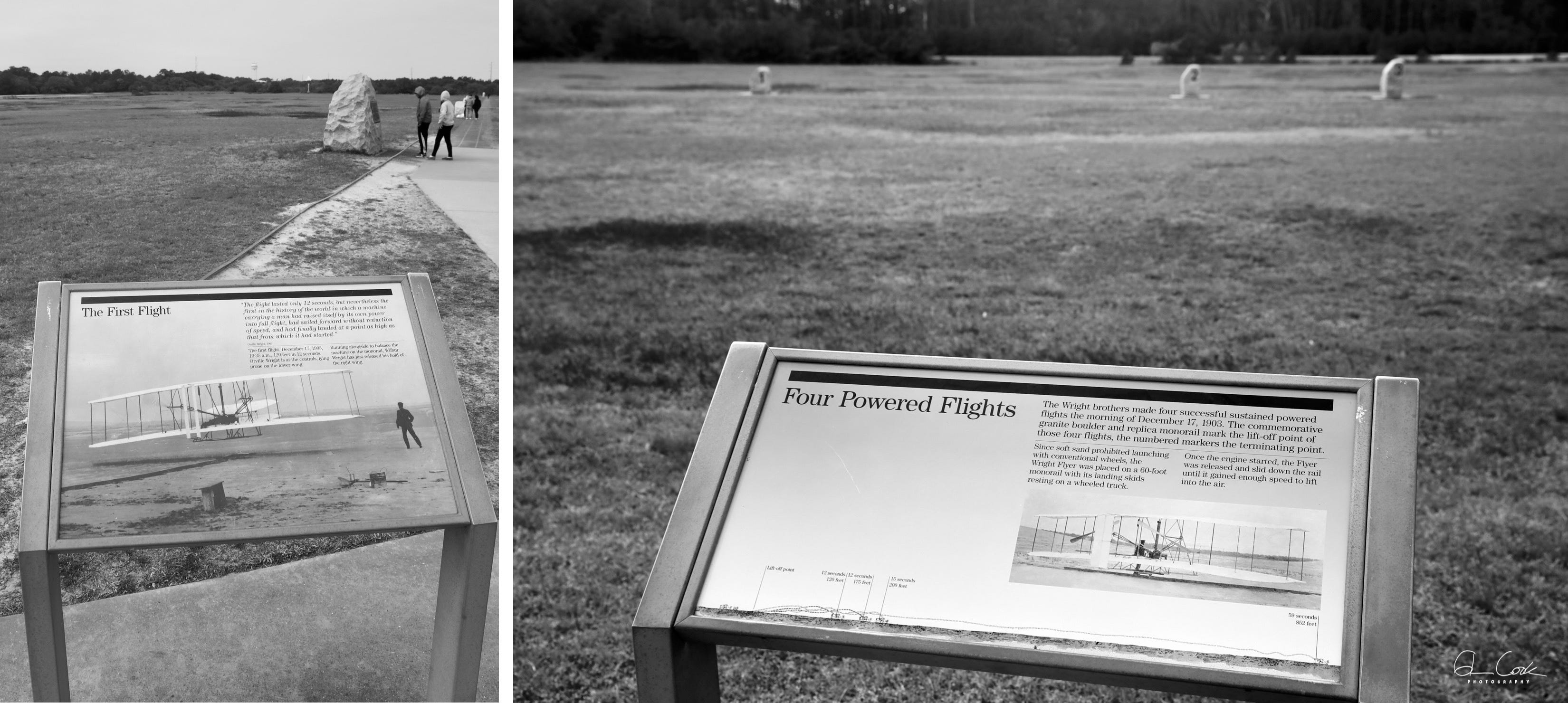
On December 17, 1903, the brothers made four short flights ranging from 120 to 852 feet from level ground in the Wright Flyer. They had set up two wooden sheds for their experiments, one of which served as their living quarters. The second became the world’s first airplane hangar.
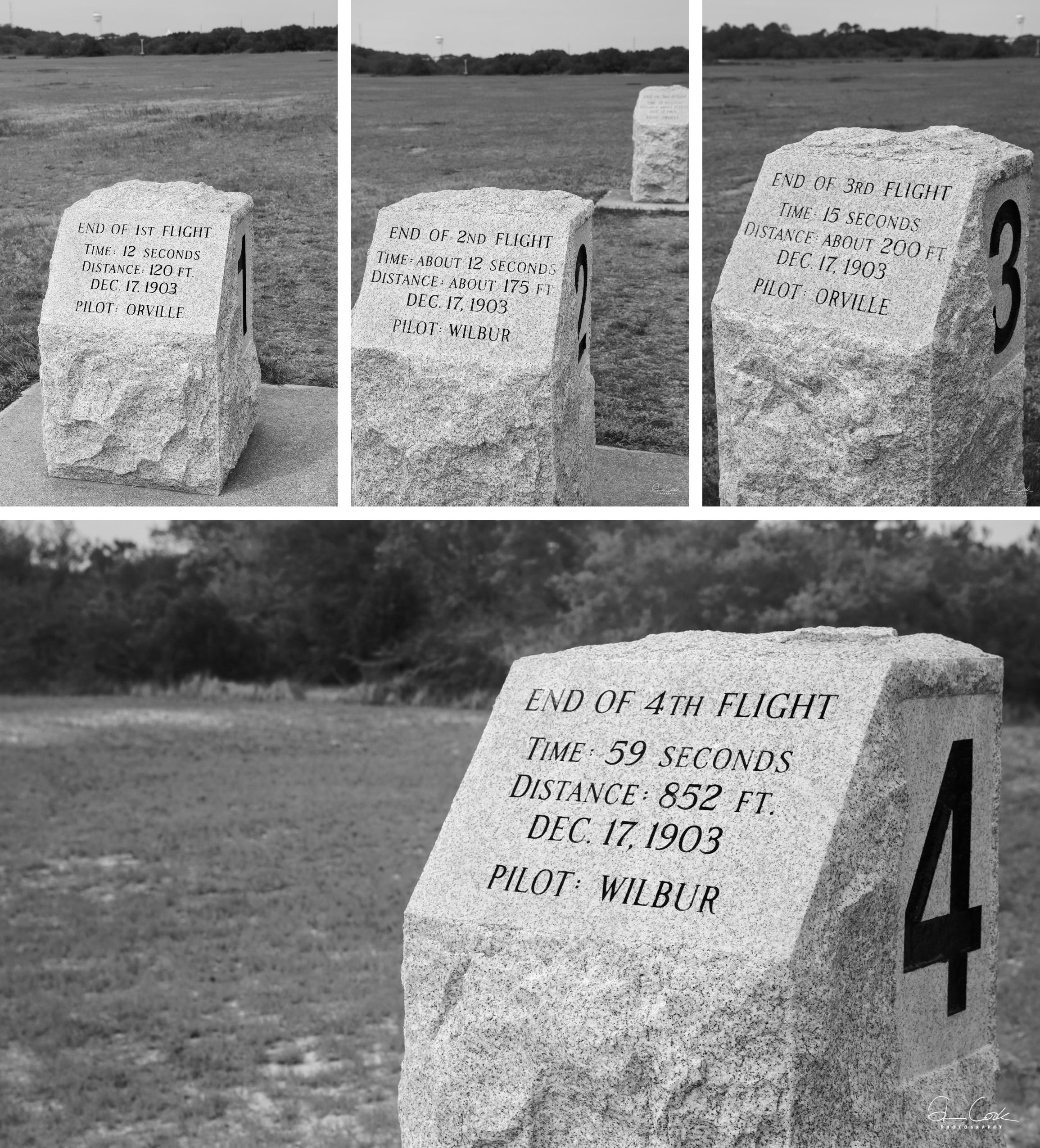
Over the years, the brothers fought claims from others — including the U.S. Army and the Smithsonian Institution — about being “First in Flight.” It wasn’t until after Orville Wright died in 1948 — Wilbur passed away in 1912 — that an agreement was reached by his estate to permanently display the Wright Flyer in the Smithsonian’s National Air and Space Musem.
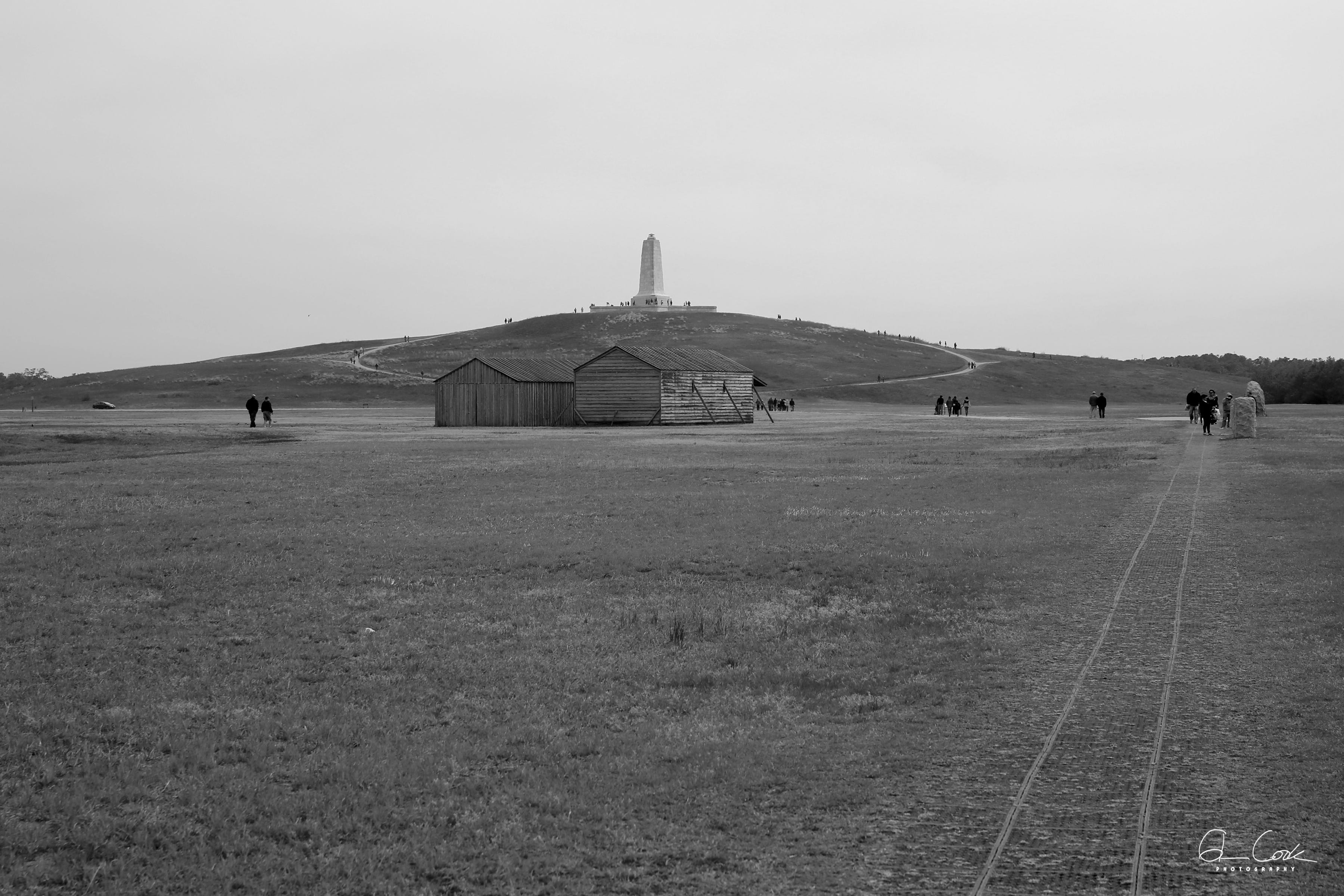
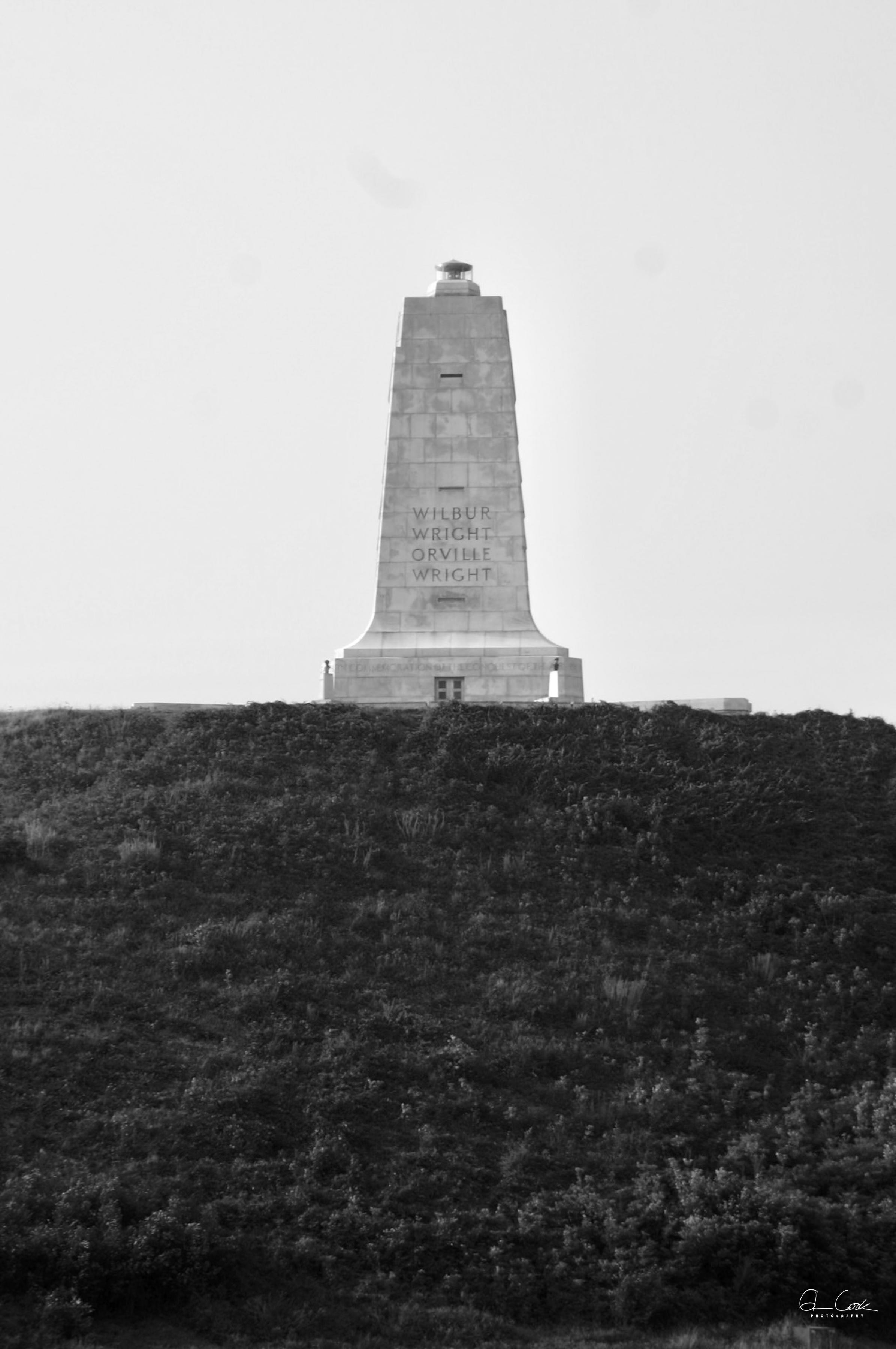
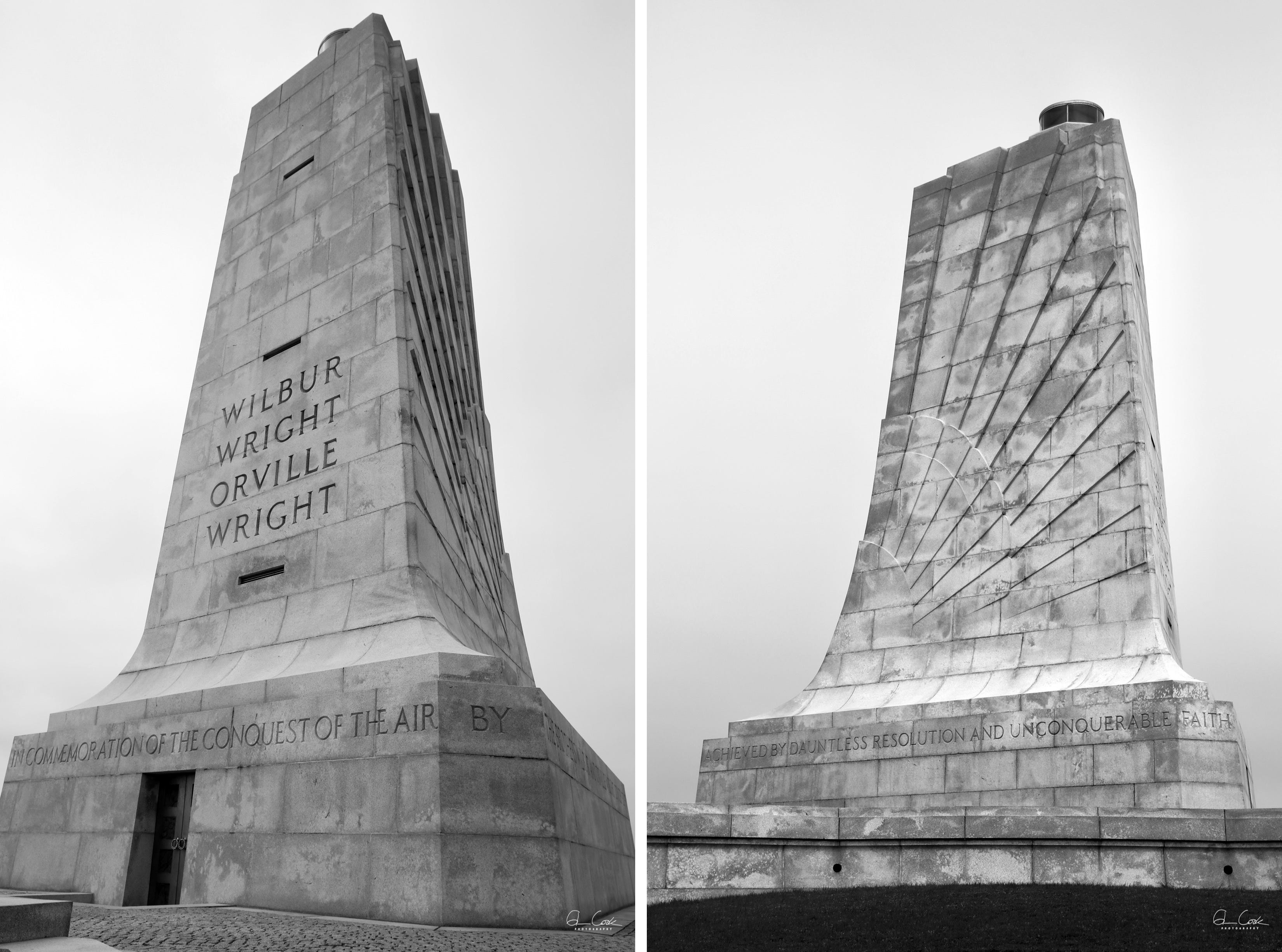
The dispute did not stop the construction of the huge granite memorial on top of a 90-foot former sand dune where the brothers had conducted many of their glider tests. Now known as Kill Devil Hill — the town itself is Kill Devil Hills — the dune was stabilized for the creation of the 60-foot granite monument that was dedicated in 1932.
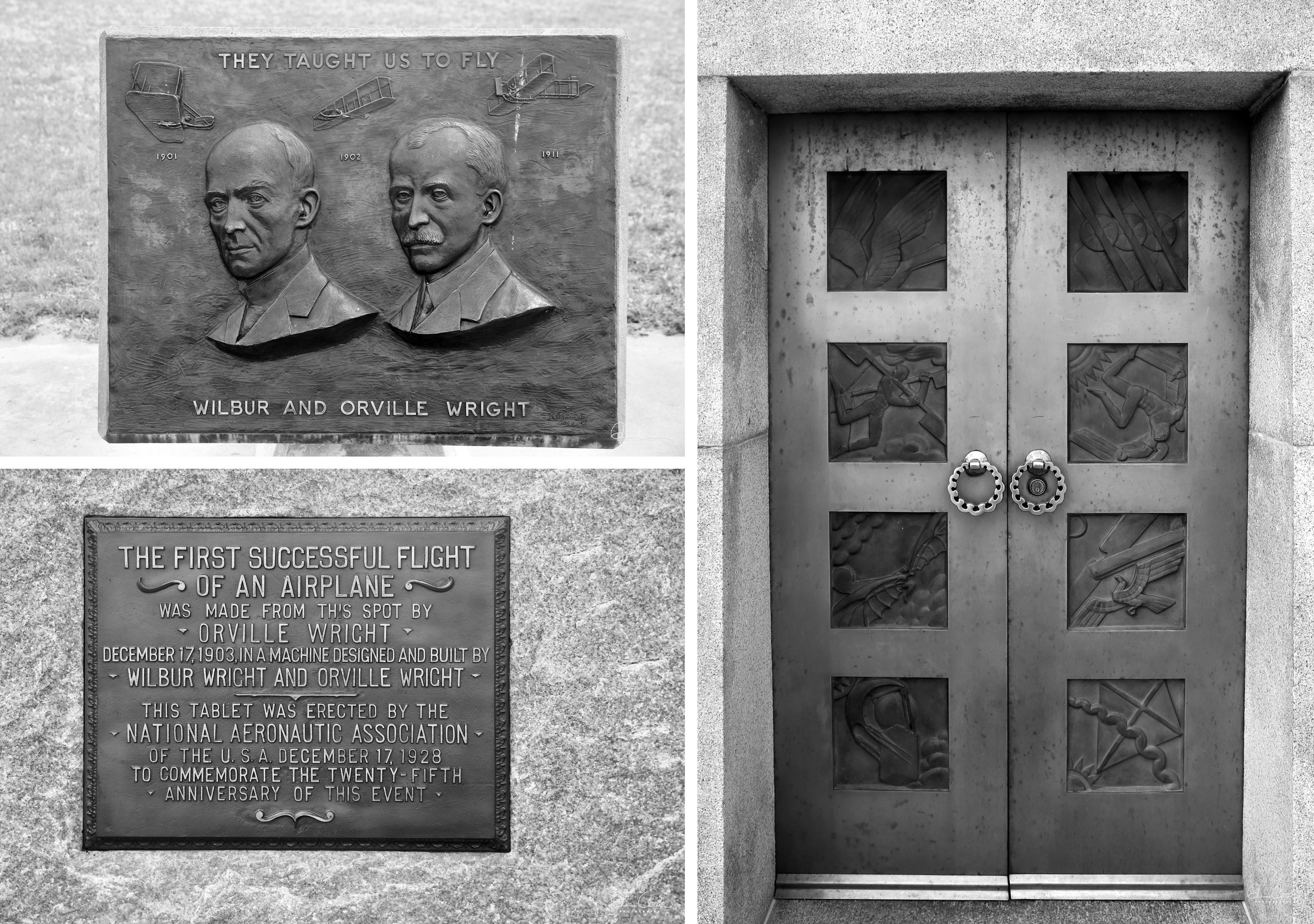
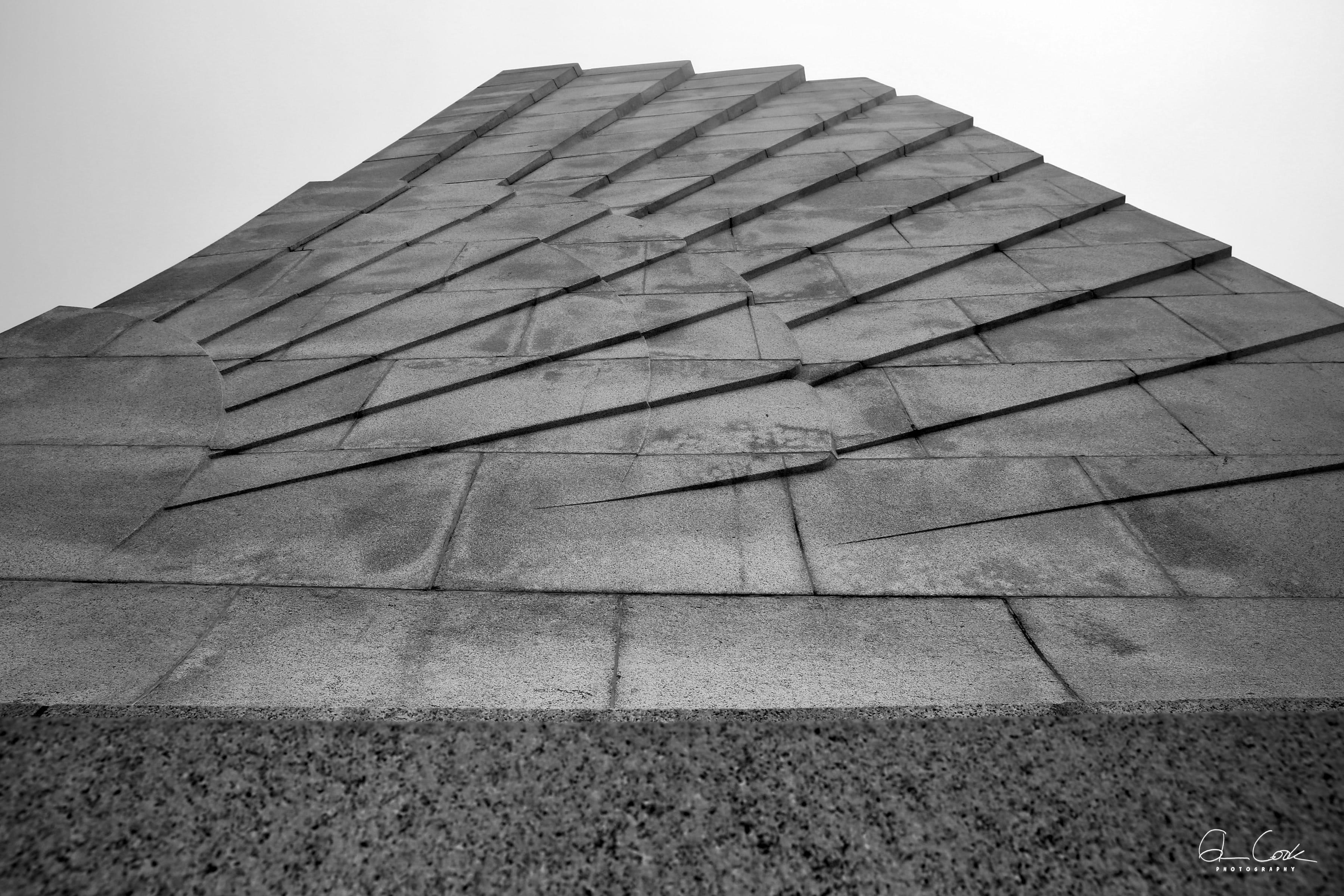
The doors of the monument are in the art deco style of the era, similar to those found at the FBI building in Washington, D.C. The door panels include references to other aviation philosophers and innovators, including German inventor Otto Lilienthal, French philosopher Cyrano de Bergerac, the Greek mythological figure Icarus, and the inventions of a French locksmith named Besnier.
My wife and I have a running joke about “travel karma.” The theory is pretty simple: When you have a successful trip with little to no traffic, know that at some point when you least expect it, you’re going to get screwed.
We made great time driving to North Carolina on this visit to the Outer Banks, only to be plagued by cloudy, overcast skies and high winds for much of the time we were there. I was determined to see the memorial this time and left out on my own one early morning.
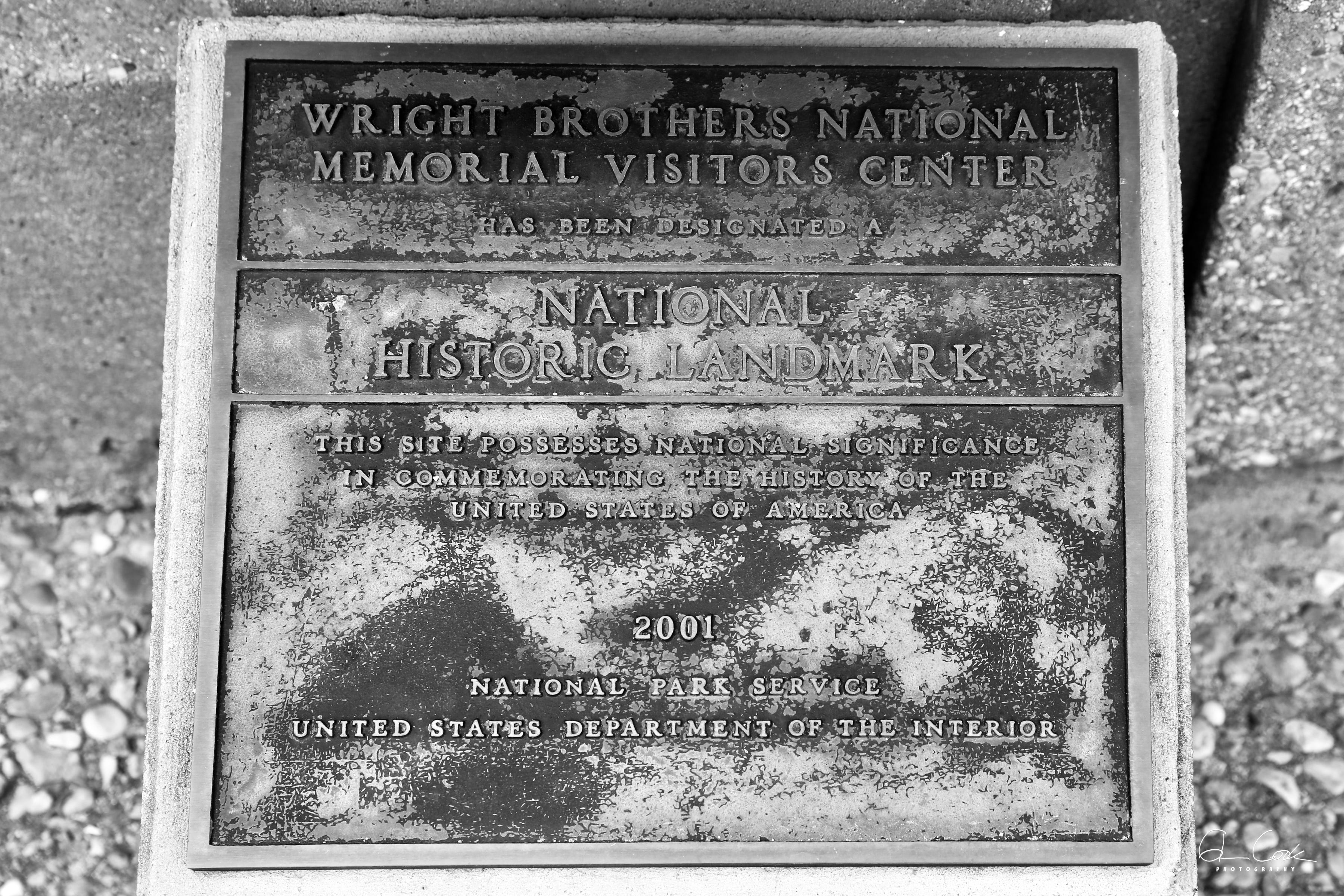
Mother Nature and the travel karma goddess were not on my side. The clouds were a persistent gray throughout the visit, providing limited contrast to the memorial site. The visitor’s center, itself a National Historic Landmark for being the first of its kind in a modernization effort, was not terribly photogenic.
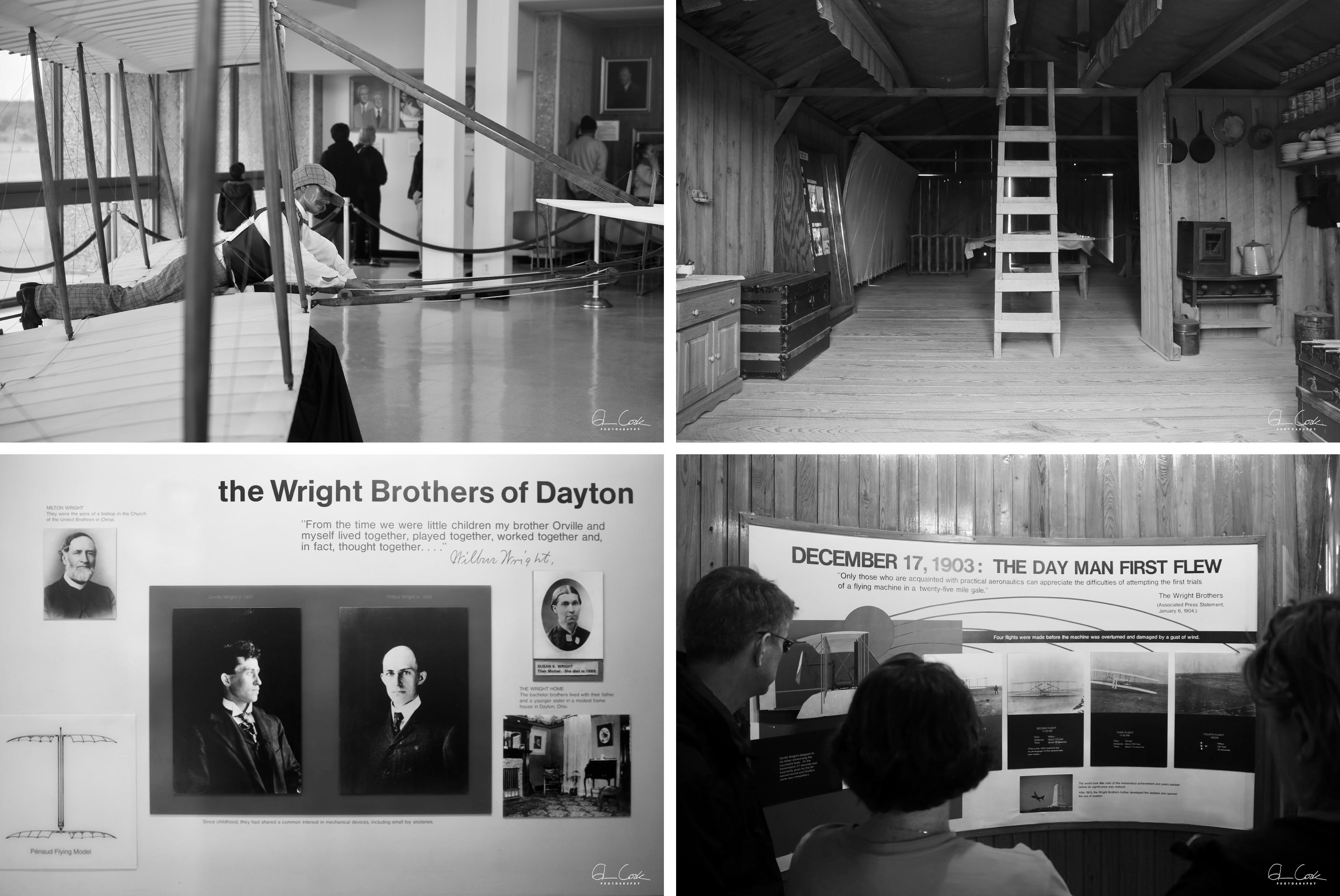
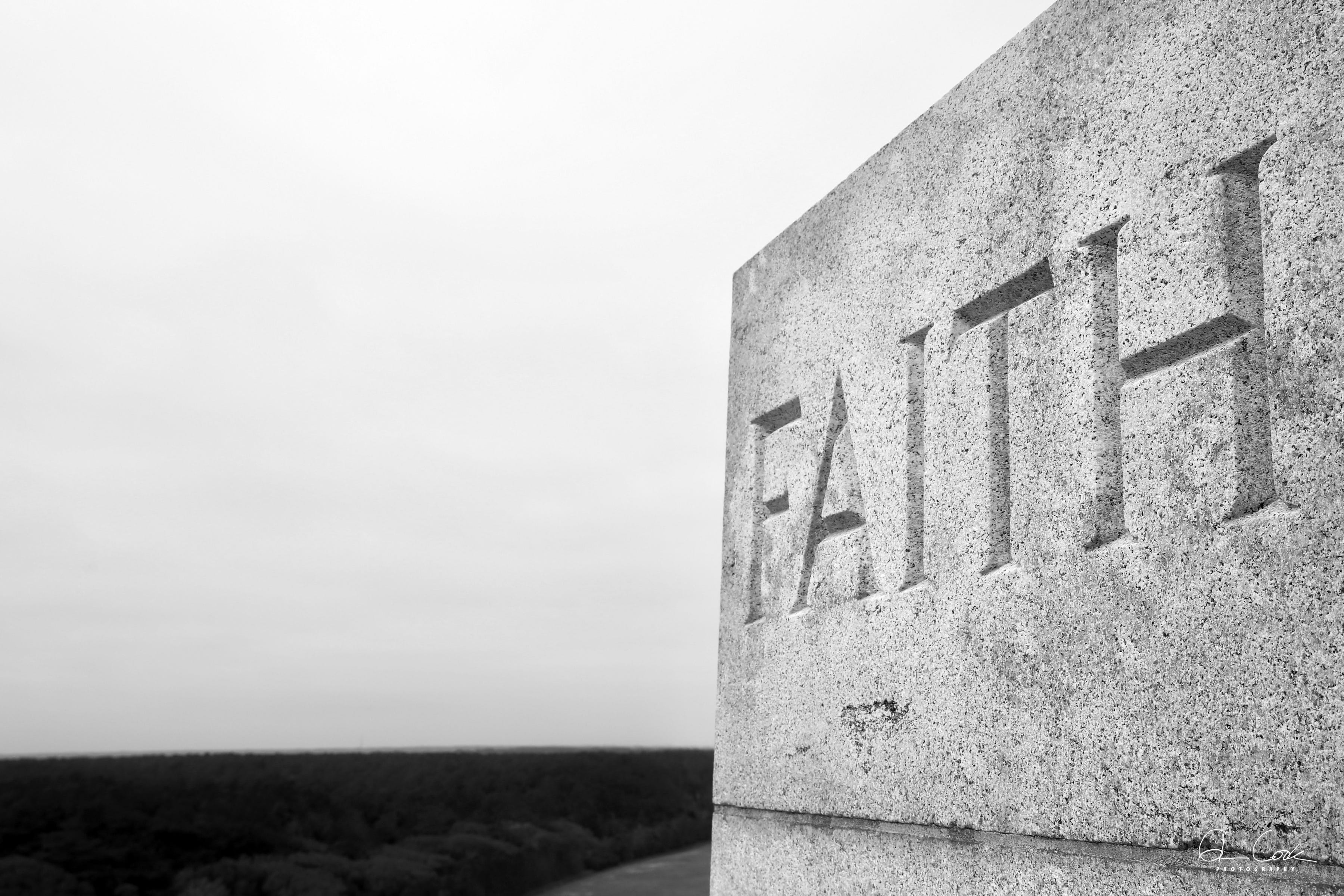
I braved the unsettling elements and went up to the memorial itself. It is an amazing structure, worthy of the Wright Brothers’ achievement. But given the weather, I knew the photos themselves would be almost colorless, which they are.
So I decided to put them in black and white. What do you think?
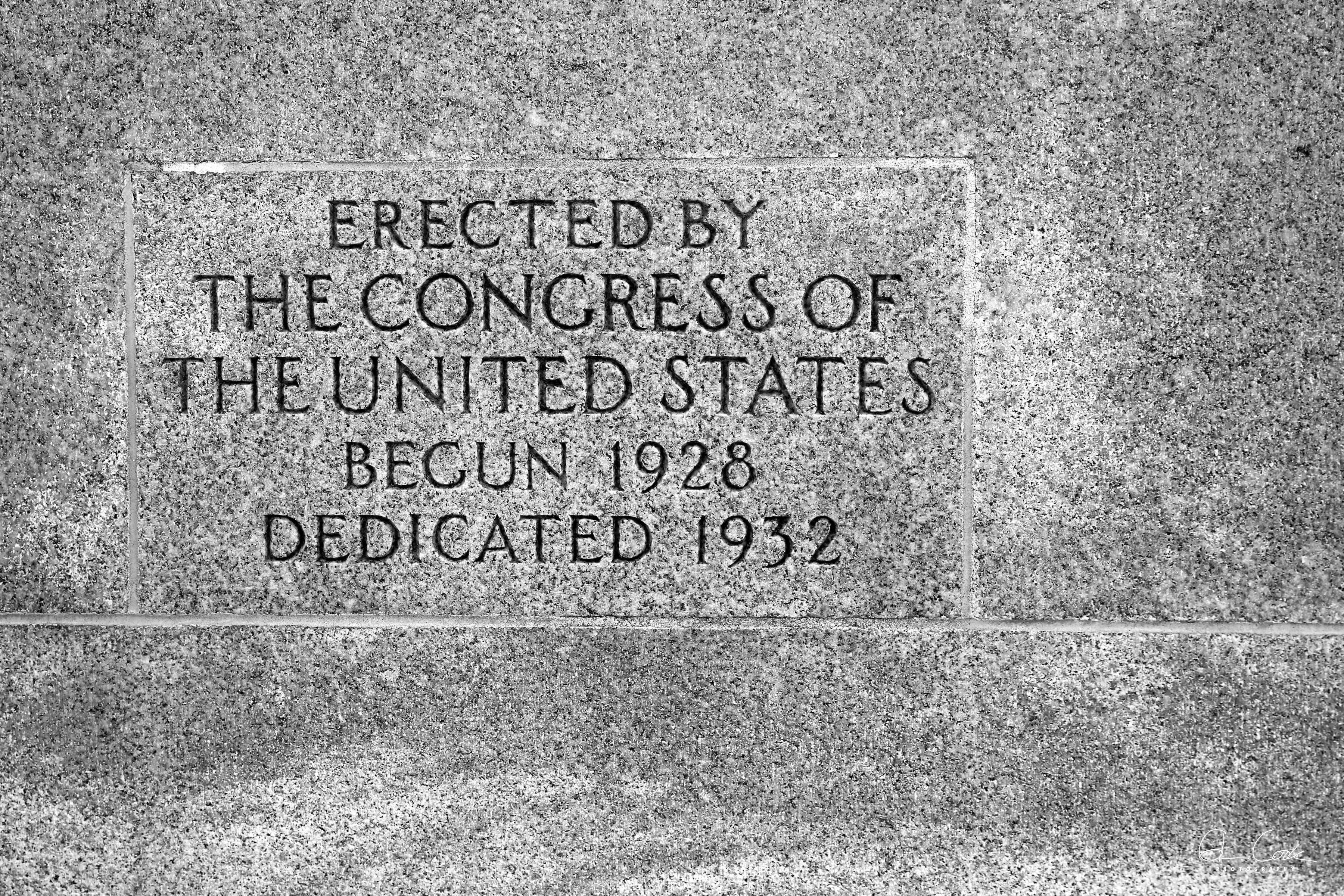
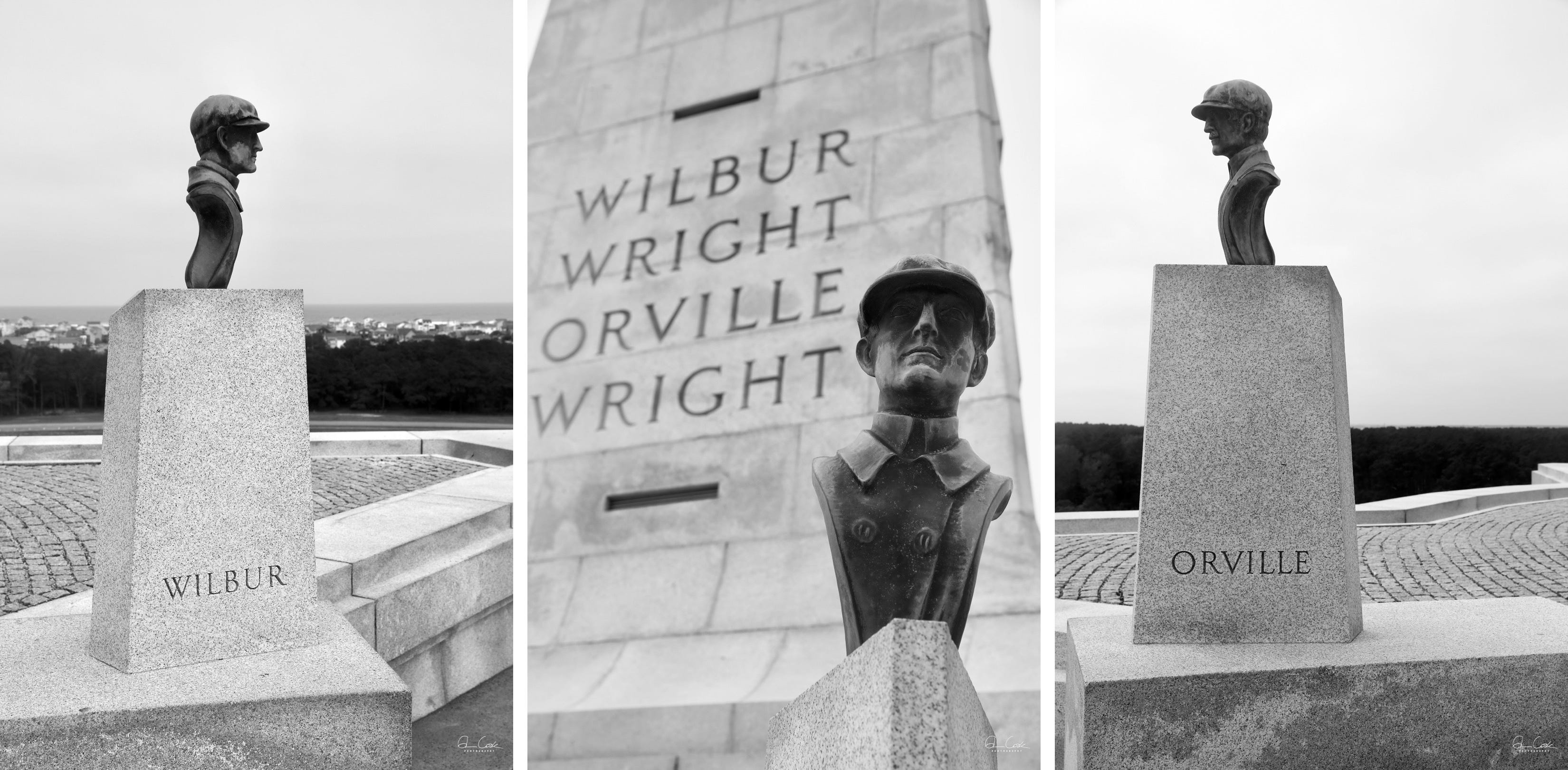
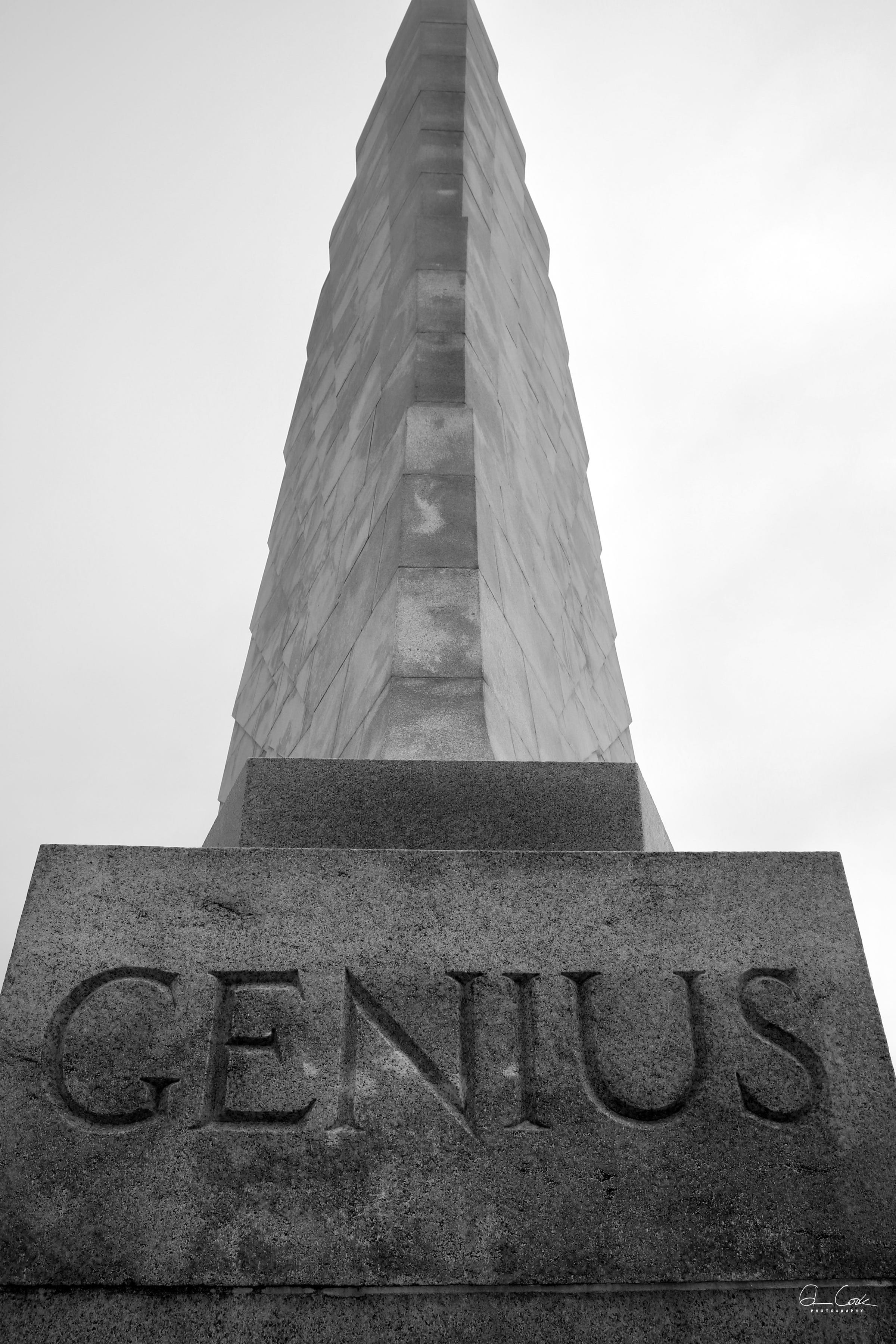
Black and white was a great call!
I'm biased, but I think everyone should visit Kitty Hawk at least once- it will completely reframe one's perspective on modern air travel. The idea that I routinely work flights where the plane *itself* is longer than the distance of the first flight is wild to think about.
I love the black and white!