How Did We Get Here?
As our nation celebrates 250 years, a personal take on where we were in 1976 and where I am now

Instead of the usual Another 52 Weeks that normally occupies this Saturday space, I decided to write a personal essay about our nation’s 250th birthday. The next edition of “Another 52 Weeks” will be posted tomorrow, and then we will resume our regular Saturday schedule.
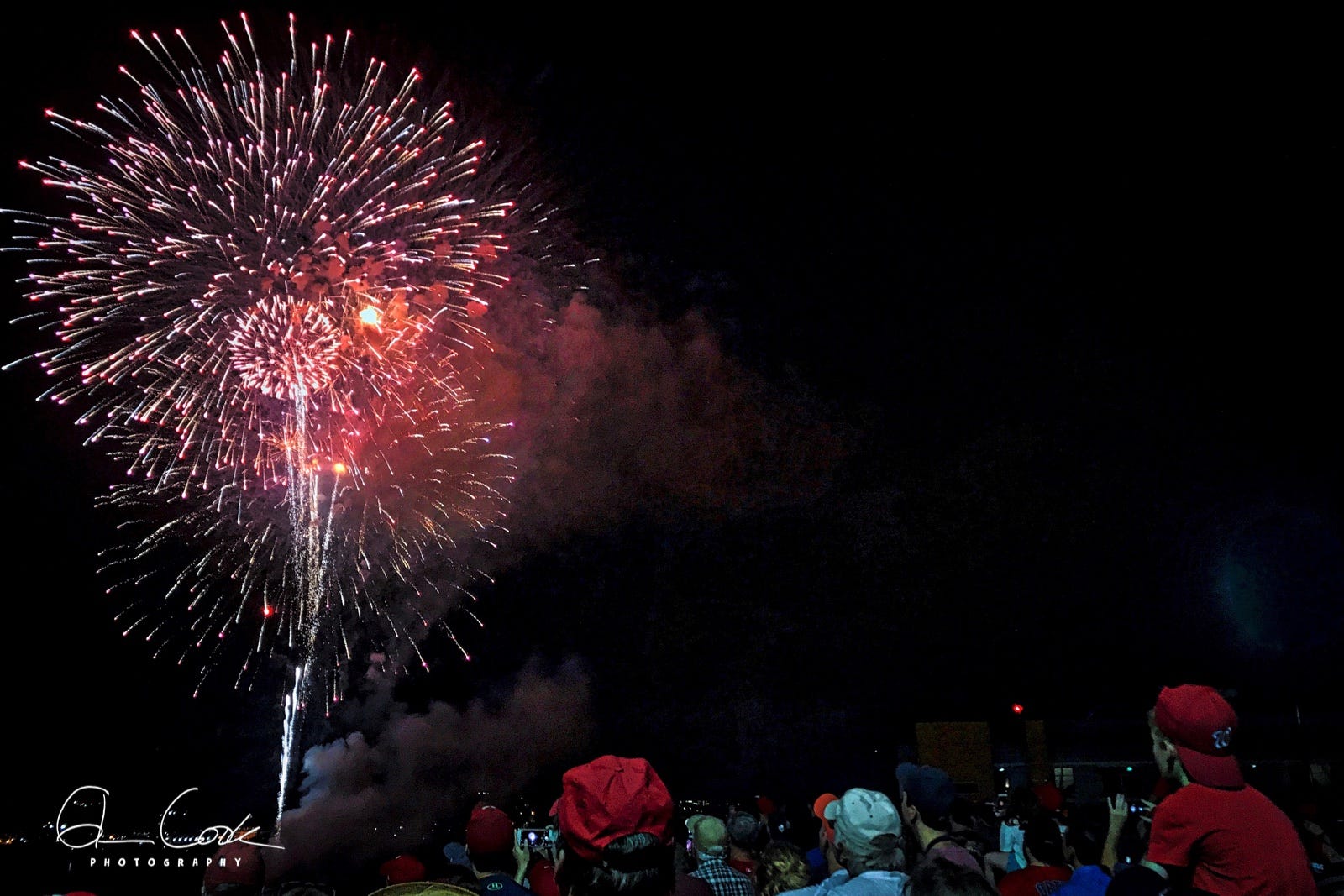
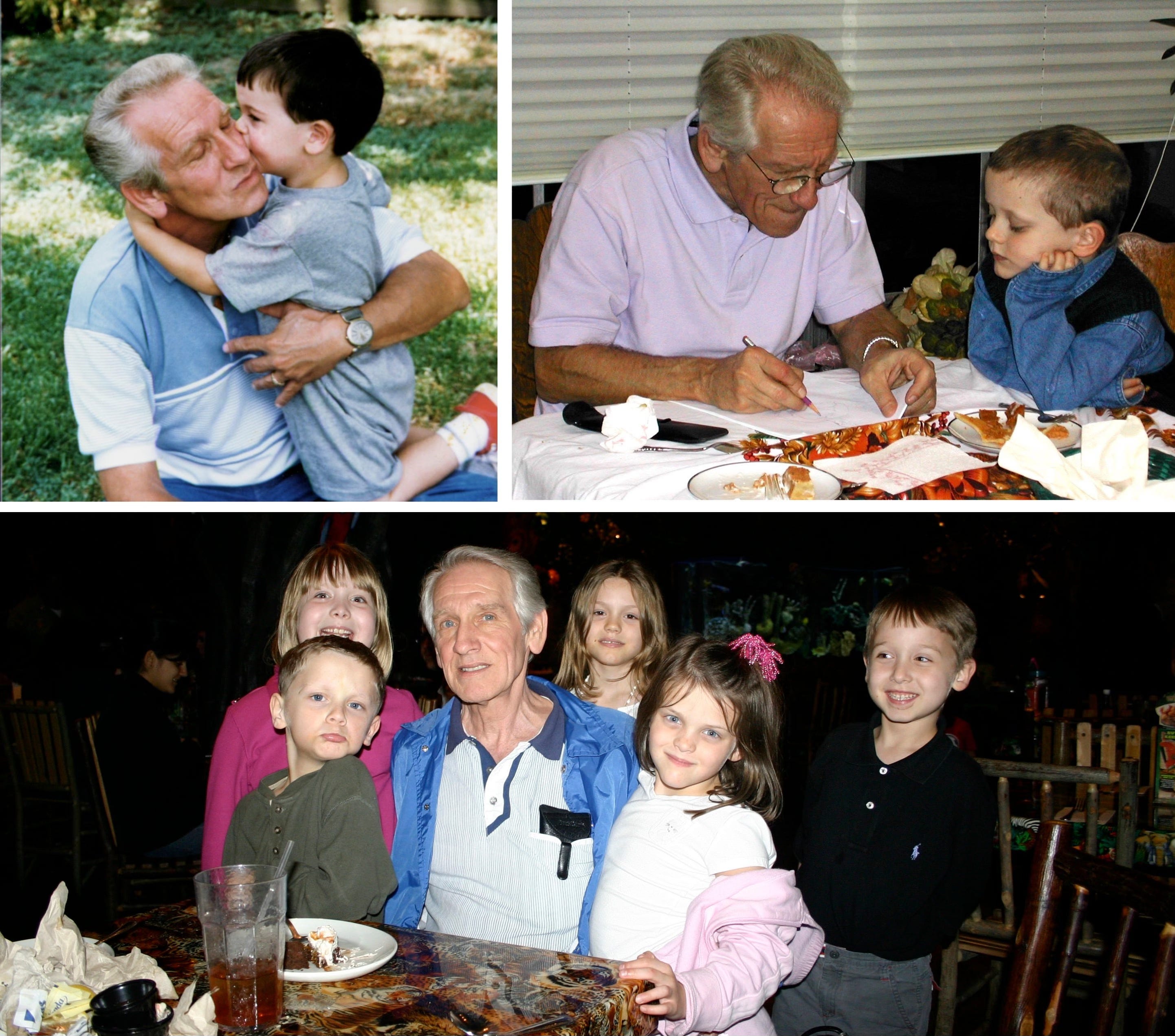
My father taught junior high art, then middle school Texas and American history for more than 30 years in the town where I grew up. But he never abandoned his artistic roots, even when he switched subjects after a 5½ year absence due to a debilitating illness in the 1970s.
You could see this in the elaborate bulletin boards he had throughout his classroom, the result of a long summer of work that inevitably included my mom — also a teacher — sweating her butt off with a laminating machine that was generously overworked. A whiff of something resembling hot thin plastic grafting onto paper products immediately flashes me back to those times.
Dad also had a first week in-class assignment for his students, one that guaranteed them an easy A if they followed instructions. He had the kids — seventh grade for Texas history, eighth for American — redesign our state and nation’s flags. He prefaced the assignment by saying he didn’t care if the students were artistic; he just wanted to see if they could follow instructions and redo the flags using the exact same elements — 50 stars and alternating colored strips for the U.S. flag; a large star and blocks of red, white, and blue for my home state.
I asked him once why he had the students do this assignment, and he said the reason was simple. How they approached the task — the ones who took it seriously, the teacher pleasers, the ones who knew nothing about the story behind the flags, and those who were ambivalent at best — provided a snapshot that would help inform his approach in the classroom.
“It’s not about patriotism,” he said. “But you can get some insight into that, too.”
As our nation marks its 250th birthday, I’m confident my dad would be disappointed in my plans for the weekend. We live just outside Washington, D.C., and instead of going into the city, I am several hours away. Sadly, we’re not going far enough to escape the scorching, smothering heat, something I can’t help but think is Mother Nature’s karmic reckoning for the nation and world we currently live in.
Evolution. Revolution.
Fifty years ago, during the summer between my fifth and sixth grade year, America celebrated its bicentennial. My father was still out of work, his illness preventing him from returning to teaching for at least another year. Our nation had been battered by Vietnam, serial killers haunting the West Coast, bankruptcy threatening New York City, and the graft and insecurities that produced Watergate, leading to the near impeachment and eventual resignation of Richard Nixon.

The progressive counterculture of the 1960s had been replaced by the “me generation.” Nostalgia for my parents’ generation came in the form of movies like “American Graffiti,” Broadway musicals like “Grease” (itself a hit film in 1978), and popular sitcoms like “Happy Days” and its spinoff “Laverne and Shirley.” The 1970s also represented the first wave or rock and roll oldies acts, with 1950s superstars like Chuck Berry, Little Richard, and Jerry Lee Lewis performing to crowds who looked like my dad.
My father spent a lot of time thinking about his teen years, the days when he was healthy, when the Cold War threat was real but still abstract, and endless reports of daily unrest weren’t all over the nightly news. Given the unknowns of his illness, all of that unrest also represented both a real and existential threat to our family’s then-wobbly financial security.
Mom and dad came from working class, fiscally conservative families. My parents were the second in both families to graduate from college, following their older siblings. Then 23 and 22, they married in March 1964, a rushed affair prompted by my grandfather’s desire for his only son to avoid the draft. I came along 9 months and 20 days after their wedding, followed by my sister 6½ years later.
In the late 1960s, my dad was fascinated by science fiction movies that looked at the end of the world. In just over a decade, he saw Charlton Heston go from playing Moses and Ben Hur to an action hero in a series of films — “Planet of the Apes,” “The Omega Man,” “Soylent Green” among them — with a pessimistic view of life and humankind. On one hand, my father saw the movies as entertainment; on the other, I think they also buttressed his lack of absolute trust in all things government, a view shared by many of his generation.
That said, dad was very enthusiastic about the 200th birthday of our country. To him, the bicentennial represented an opportunity for our nation to put aside its differences and celebrate better days. In the toughest times in U.S. history, he told me more than once, we managed to come together as a country. Even if you disagreed with someone on the other side, you still had manners. Even if you weren’t sure about someone else’s motives, you still believed in our democracy.
That, to him, was an example of real patriotism.
Endlessly curious and not afraid to ask questions, I wanted to understand how our nation had reached certain conclusions, the “why” behind decisions. More often than not, the grind of dad’s illness, the questions I asked that made them uncomfortable given their upbringing and worldview, and the sheer exhaustion that comes with having an endlessly curious kid led my parents to tell me to look things up on my own.
Looking back … and now
In a box in my grandmother’s cedar chest in our front bedroom, I have a bicentennial button the size of a softball that my father bought for me. Through endless moves since I left home, I’ve never been able to part with it.
But I don’t remember many details of what happened on July 4, 1976, in Texas City, Texas. I’m pretty sure that we went down to Bay Street on an inevitably humid evening to watch the fireworks that were shot into the Gulf of Mexico. I do remember that my father, a car nut, would not let me sit on the hood of whatever used Cadillac he owned at the time out of fear that my chubby ass (my words, not his) would dent it.
My political and (to a large extent) social views diverged from my parents 40 years ago, when I started moving left of center during the AIDS crisis and did not look back. Over time, the gulf between us that formed then has not been narrowed but, to their eternal credit, they were/are respectful of my point of view. Despite a few jabs here and there, we did not become caught up in the partisan debates that have split too many families and ended too many friendships.
But I can’t help but wonder what would have happened had my father not died almost 20 years ago, when things weren’t so separate and strident. My mom, still alive and feisty at almost 85, does not engage with me about political and social matters.
Even though the U.S. is dealing with severe challenges that somewhat mirror those we faced in 1976, I can’t help but think that our current circumstances are worse. We live in a partisan country led by an autocrat — and I’m being nice in my description — who is more concerned about ego strokes and graft that feather his family’s nest and fortune. (I’m reasonably certain he’s made an appointment with Satan to discuss the naming rights for his eternal place of residence.)
I’m also certain my dad would wonder how I could miss a once-in-a-lifetime event, a chance to celebrate a milestone birthday for our country that has given me so much. I hope he — and others who don’t necessarily share my political/social views — would understand in a respectful manner.
Almost 19 years after his death, I’m reasonably confident that my dad still would be respectful.
Sadly, I can’t say the same for others who disagree.
Here’s another Fourth of July essay:
Fourth of July

The first time I heard “Fourth of July” was in a sweaty Houston club in July 1986 on a rare night off from the Texas City Sun. A parttime college student at the time, I was 21 and gravitating toward the bands played on KTRU, the Rice University station that my friend Brian had turned me onto.
I love this country, but I am also thankfully several hours away from DC (as our family does every year to escape the heat and craziness around the holiday)
Great piece, Glenn! I was too young to remember anything about ‘76, but my whole life I’ve heard about how fun it was (for lack of a better term), despite everything going on. I mean we even got a cool quarter out of it!
I guess on some level I expected this year to be similar, but no go. Maybe in 2076…
P.S. I can smell that laminating machine from here.
P.P.S. I was a husky kid and wasn’t allowed to sit on the car, either.