Taking Time
A side trip through Waterbury, Conn., provides an interesting history lesson


When I travel, I’m always looking for places off the beaten path to stop and shoot. Unless it’s a longer trip with a precise schedule, I rarely plan these stops, preferring instead to see what I randomly find.
Several years ago, driving through Connecticut on a trip from New York to Boston, I stopped in the town of Waterbury. Like many municipalities these days, Waterbury advertises its “Historic Downtown” from the highway in an attempt to attract visitors like me.
In this case, it was not false advertising. Waterbury, with all of its ups and downs, has a fascinating, colorful history, not to mention a fair share of political scandals and tragedy. Located 75 miles northeast of Manhattan, it is the birthplace of photographer Annie Leibowitz, a number of actors (Bob Crane of “Hogan’s Heroes,” Dylan McDermott, Sheryl Lee Ralph, Rosalind Russell), former baseball commissioner Fay Vincent, and Robert Gallo, the researcher who identified HIV as the infectious agent that causes AIDS.
Known as “Brass City,” Waterbury was a manufacturing hub from the mid 19th century through the first half of the 20th century. (James Thurber’s The Secret Life of Walter Mitty is set in Waterbury in the 1930s.) Still one of the largest cities in Connecticut, the town went through a severe economic decline in the 1970s and 1980s as factories shut down.
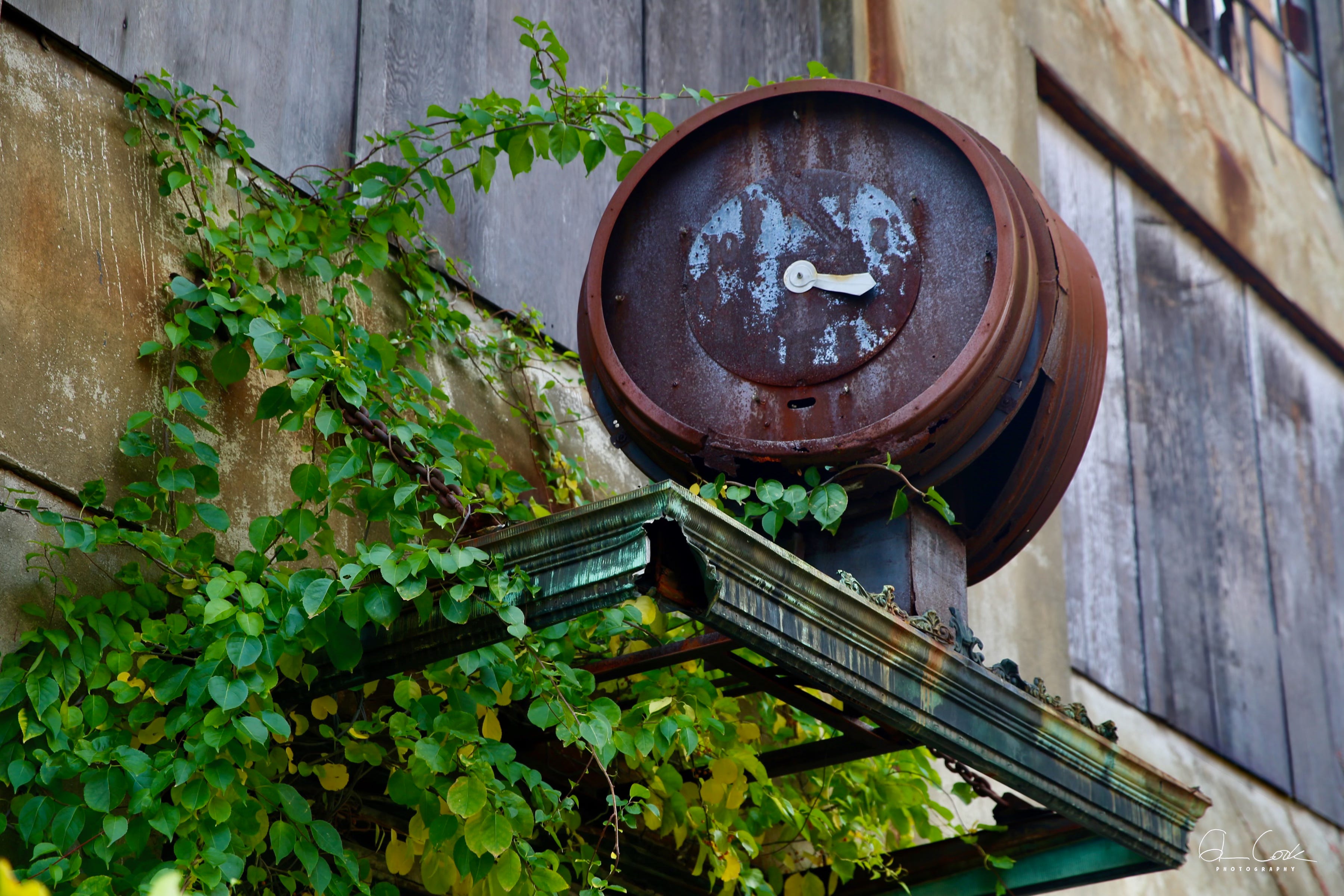
One of those factories was the former Waterbury Clock Company.
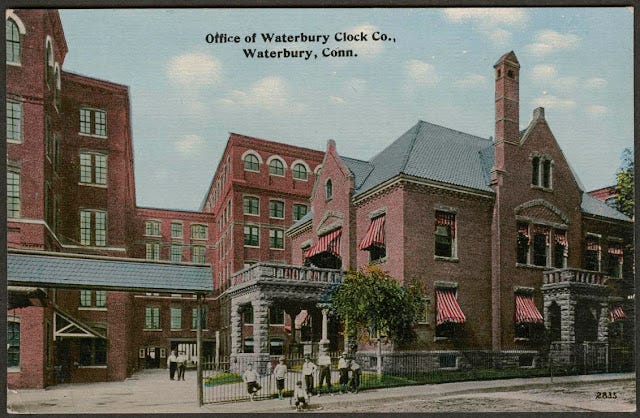
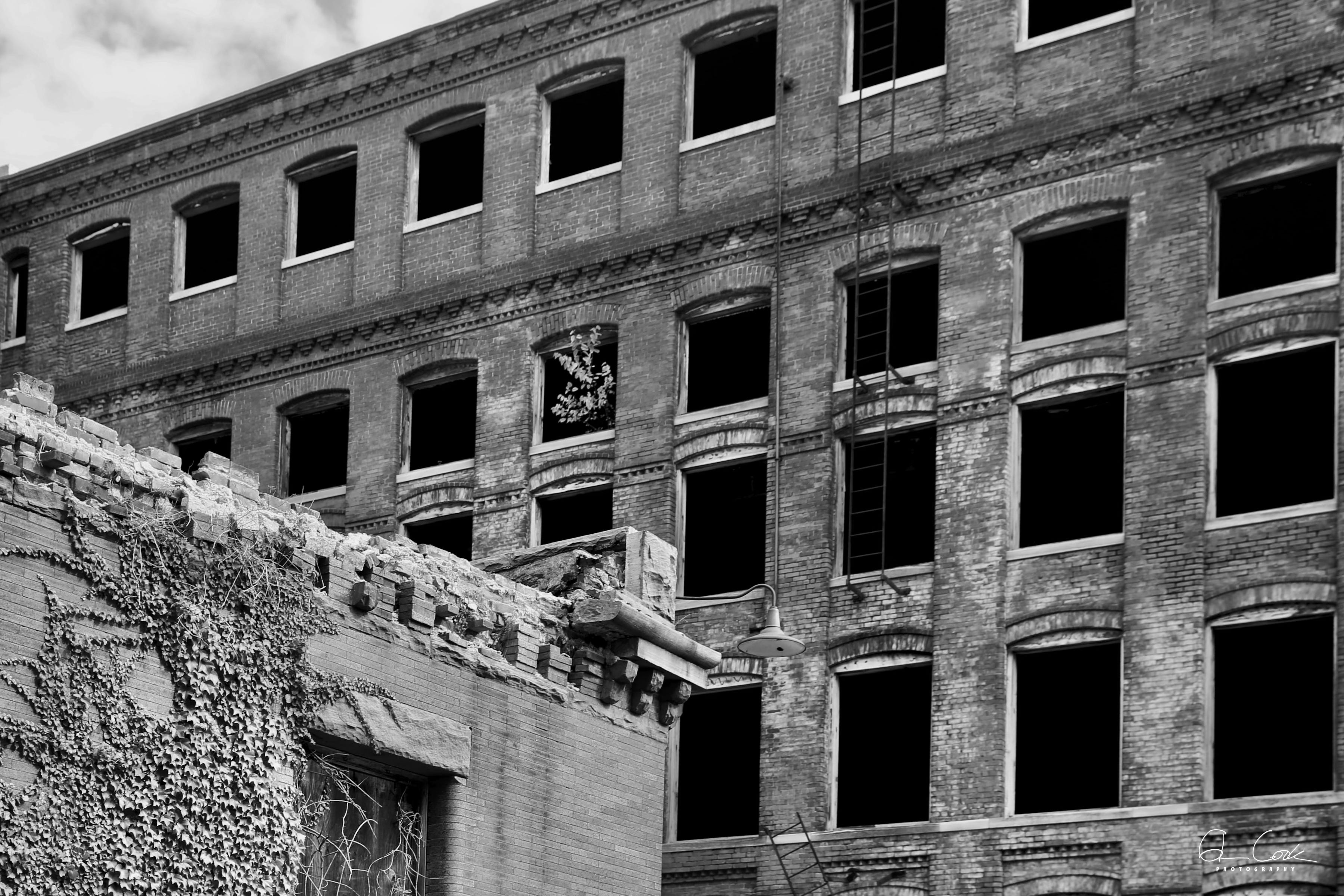
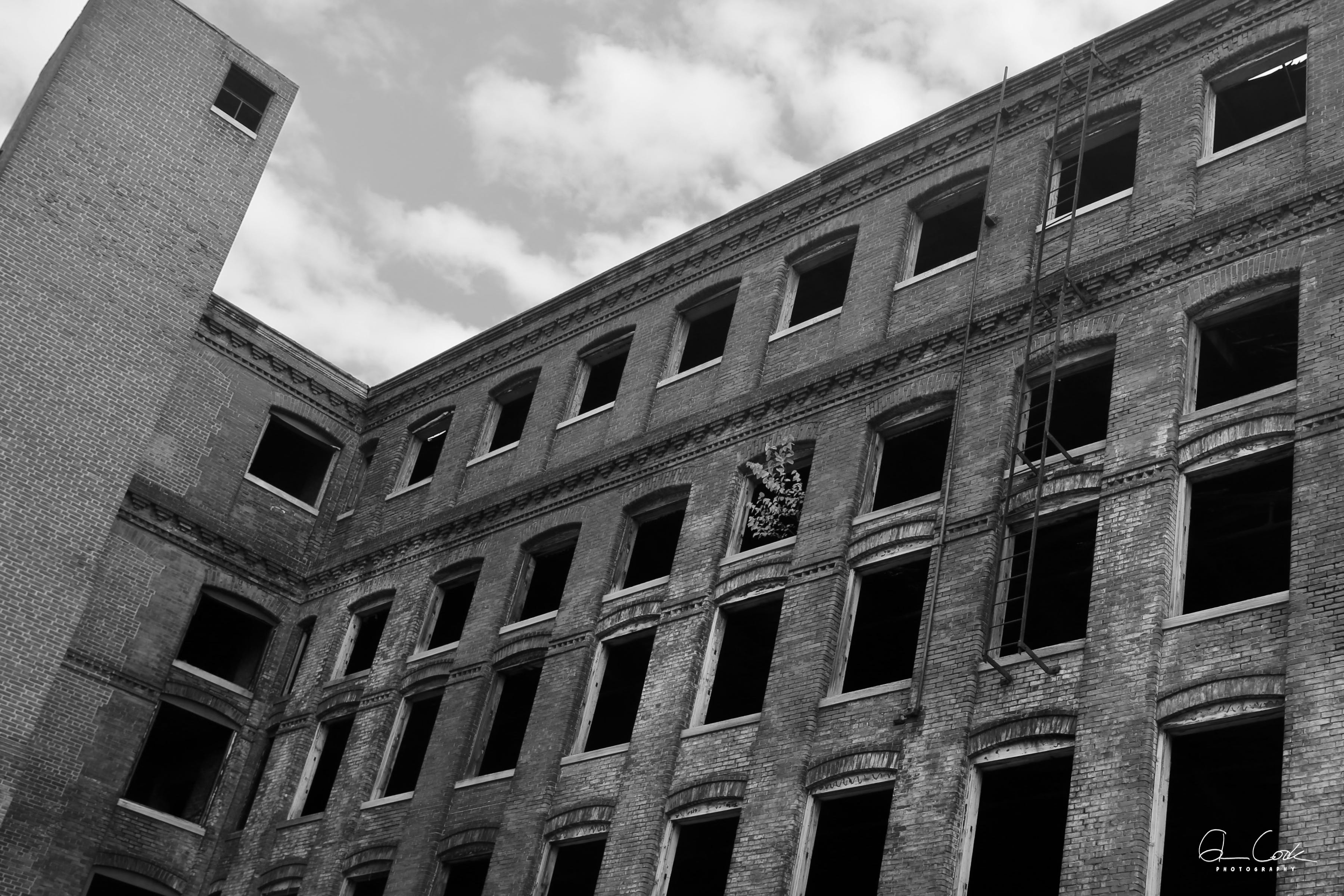
The complex, which is on the National Register of Historic Places, was a series of multi-story red brick mill buildings constructed in the 1850s and expanded as the company grew. Driving up to the long-abandoned buildings, which were surrounded by a fence to keep trespassers at bay, I was fascinated by the Neo-Classical Revival elements that dominated the era.
According to a local historian’s blog about the facility, the Waterbury Clock Company employed 3,000 workers and manufactured 20,000 clocks and watches per day at the end of the 19th century. The company produced the famous $1 pocket watch invented by Robert H. Ingersoll, selling 5 million worldwide; in 1933, the Mickey Mouse watch produced by the Ingersoll brand was so popular that it sold more than 2 million over 18 months and saved the company from bankruptcy during the depression.

Tragedy and Departure
In the 1920s, numerous young women hired to paint luminous watch dials were poisoned by radium, which was used to meet a growing demand for glow-in-the-dark timepieces. At least 15 dial painters died from the poison; the company had to pay more than $90,000 between 1926 and 1936 to settle lawsuits and medical claims.
In 1944, the company was reorganized and renamed the United States Time Corporation — now the Timex Corporation — and the headquarters were moved to Middlebury five miles to the south. In subsequent years, the complex was subdivided and taken over by other businesses, but the area still is tested regularly for radium contamination.
Soon after my visit, the former corporate headquarters at the Waterbury complex was torn down because had been ruled unsafe.

But Timex has held onto its history; several years ago, it unveiled a limited edition of the $1 pocket watches. And just last month, it released the Waterbury Heritage Chronograph, a new watch named after the town and the company where its operations began.
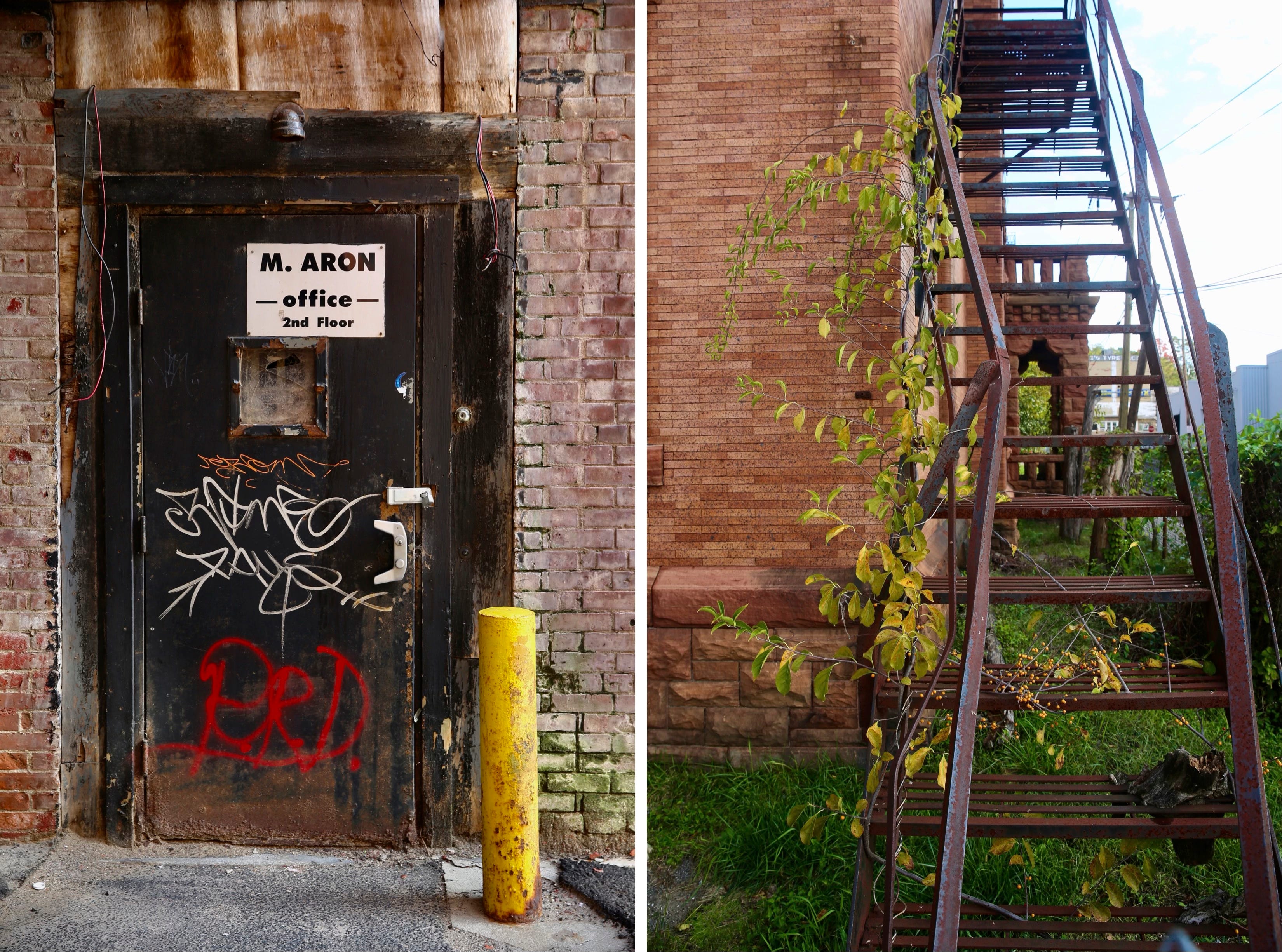
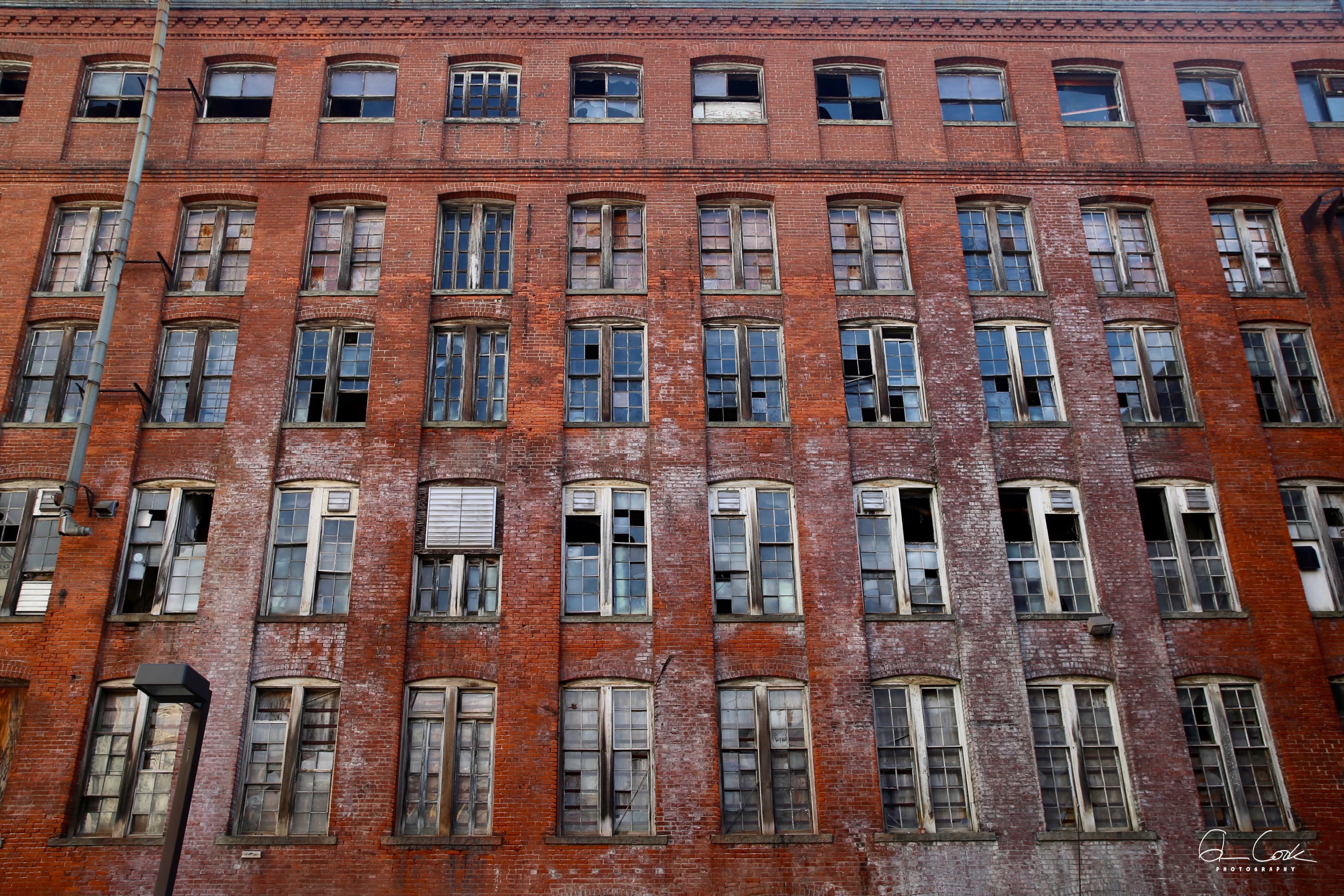
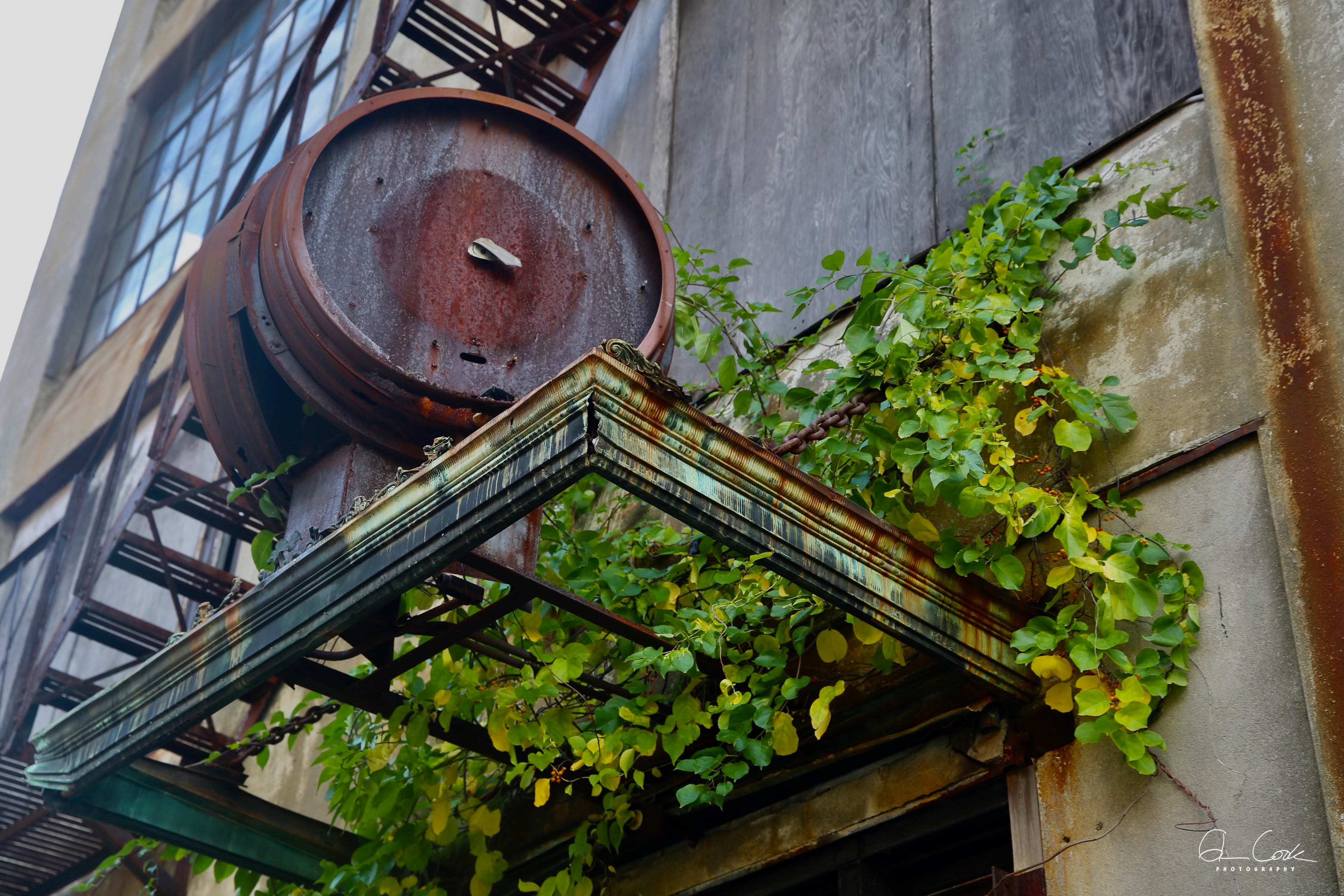
Here are more photos from my impromptu tour:









My grandmother worked at the Dixie Cup factory in Easton, PA. That's now a dilapidated shell of its former glory too... would make a fascinating place to shoot.
Fascinating history and photos. Those building fronts have so many stories to tell. Though I must confess, on first glance I thought this might be an essay on Physical Graffiti. 😜