
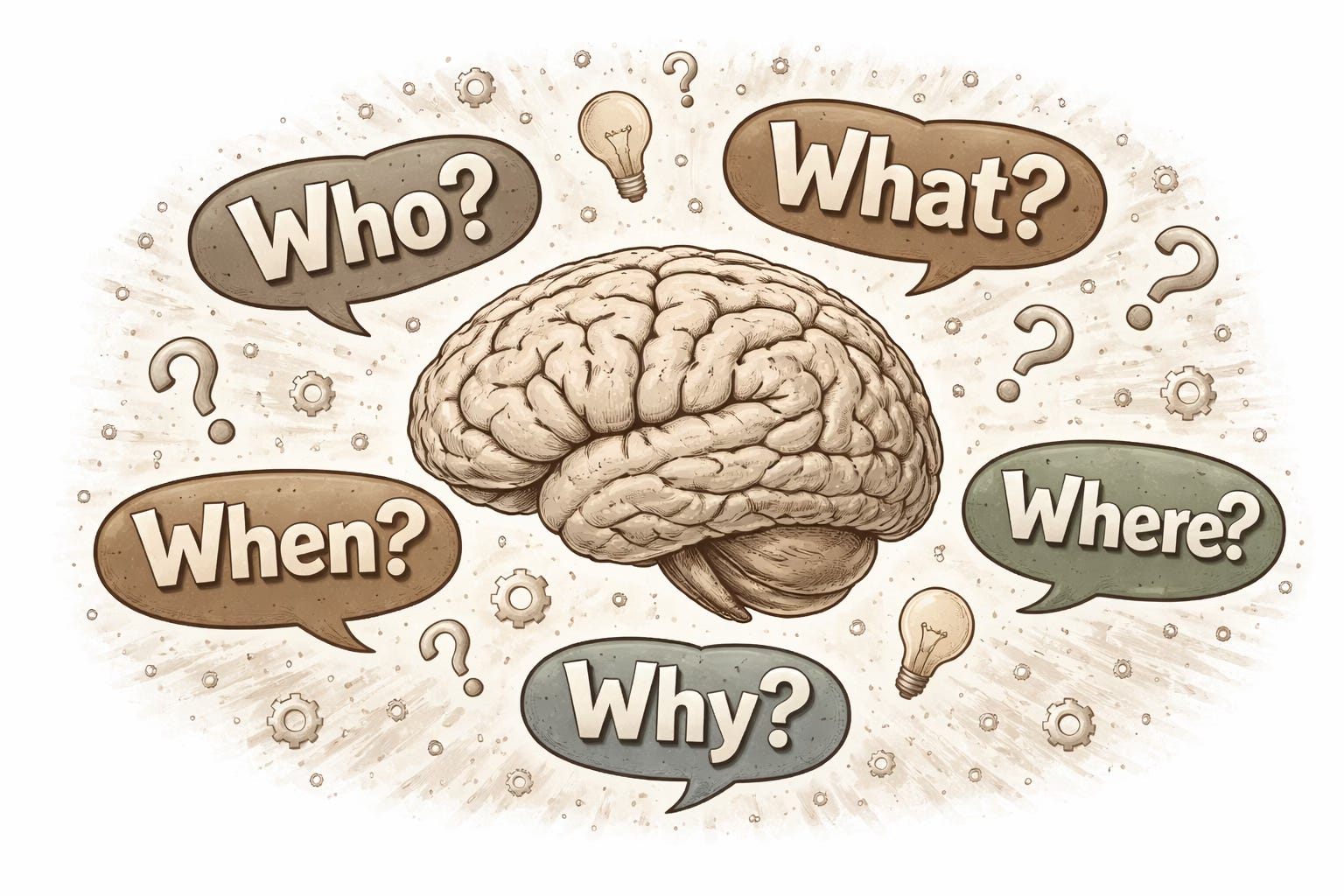
This essay, and the AI generated illustration I made for it, is a little different from my usual style. But I hope it gives some insight into how I think.
I write things down all the time, lines and observations about the things I find funny, obscure or intriguing. There’s no sequential or scientific process to this. I’m not keeping an ongoing diary.
Writing things down helps me process the world around me, and let’s face it, the current space we’re occupying is in the midst of a Godzilla-sized shitshow. Instead of writing my way out of it, I’ve spent much of the past several months trying to insulate myself. It’s felt like self-preservation.
It also feels unhealthy. We’re facing endless noise from the politicians, trolls and social media influencers constantly seeking to invade our brains. The repercussions of their actions and poor to immoral choices are digging holes for which there is not enough backfill.
That’s my opinion. Some would describe me as jaded or a smartass; others would think I’m naïve. At age 61, my assessment is that it’s a little of both.
In many respects, I am blessed and privileged beyond my wildest dreams. In others, I’m still that lonely, insecure child who never thought he would amount to anything, a person who never reached his potential. It’s an internal push-pull that never seems to end.
Determined to kickstart my processing of the world again, I decided to embark on “The 5Ws Project” this week. It’s simple: You write down everything that comes to mind when answering five simple prompts — who, what, when, where, and why — in a stream of consciousness.
“The 5Ws Project” can be an inward look or observations on the world around you. Mostly, it’s word vomiting a mood check onto a page in a way that helps you reflect and, where necessary, recalibrate.
I’ve done this before at points in my life, but I’ve never published one. Maybe you can try this as well.
Who?
Everyone has a story.
I consume and tell stories — those of others, mostly, but each of them in some small way mine — all the time. You might say it’s been the calling of my life.
Most of my personal stories are about standing on the periphery, observing others at work and play, chronicling how they overcome personal and professional challenges and obstacles. For years, I did my best not to insert myself into others’ stories; I didn’t want my experience to feel invasive to the subject or the reader.
I wish I could say my motivation as a storyteller has been endless curiosity, but in the dark corners of the night, I realize that’s not quite it. If I’m being brutally honest, something that occurs often in those dark corners, accumulating and telling the stories of others has given me my own to tell.
I’m grateful that everyone has a story.
What?
“What?” is easy. For me, the harder question to answer is “So what?”
As we age, a growing sense of unease starts to permeate our brains, slowly at first but subject to rapid acceleration depending on events both within and outside our control. We worry about our physical health, our mental outlook, and question whether we can continuously tap into the energy well to support both. We fret over our place in life. We start thinking about legacies.
We question our relevance — if not in the moment, then in the future we try to hold at bay. Give me a reason to read this, I tell myself when I’m writing. And on a deeper level, I wonder if others care what I think.
And do I care if they care?
When?
If not now, then when?
The passage of time has a way of shaping memories. Some, for whatever reason, have stuck with me for decades, attached to my brain with industrial strength command strips. Others seem lost, only to emerge again via a random prompt or triggering event.
I have friends and family who keep the good memories and avoid or toss aside the bad. Others hold onto the bad like a medal or badge of honor, unable or unwilling to overcome the roadblocks and potholes they encountered at earlier times in their lives.
I learned a long time ago to listen to the “aha” moments that come to you in dreams and wish I had been smart enough to capture them all. I woke up in the middle of the night this week with a clear lede for another story I’m writing. Before I went back to sleep, I managed to convince myself that I didn’t need to write it down.
Wrong again. When will I learn?
Where?
I’m writing this at my desk in a co-working space in Alexandria, Va., surrounded by music, books, and clutter that needs to be tossed or filed away. Most of the books, a majority of them memoirs, are about music. Musicians and the hard lives most of them live fascinate me, even though I’m genetically predisposed not to sing or play an instrument.
A rectangular green box, filled with postcards and ephemera that my grandmother collected almost 100 years ago, sits to the right — an unfinished art project that I’m still trying to decide what to do with. The program from “Buena Vista Social Club,” the Broadway musical based on the Ry Cooder-produced album that we saw this past Christmas, is on top of it. Family photos — pictures my mom sent when she was working on a Storyworth project about her life — are stacked in the bottom desk drawer.
I’m not sure why I haven’t sent them back to her.
The clutter, to an extent, is comforting. The mix of things old and new, intermingled on and inside a single desk, are evidence of a life and my experiences. In some weird way, they serve as a sign that I was here.
Why?
It’s the eternal question. The first that comes to mind when something tragic, strange or unusual happens. It’s the question we ask — or avoid asking, usually to our detriment — when conflict arises.
I spent the first 40 years of life looking forward, blinders on, before life’s rearview mirror crept into my line of sight. Two years later, my father and the woman I refer to as my second mom died within six weeks of each other, and that rearview mirror moved into a permanent position in my brain.
The “why” questions began. I thought it was a short-term phenomenon; one in the laundry list of tasks you face when processing grief.
“At some point,” I said to myself while lost in the wilderness of my brain, “this will end.”
That was only partially true. Active grieving eventually passed, but the nagging “why” questions — about my childhood, about the decisions (good, poor, confused, and stupid) I made to that point — remained. As I’ve gotten older, a series of life events have gradually nudged and eventually forced me to confront them.
I’m still doing so to this day. My story remains unfinished.