
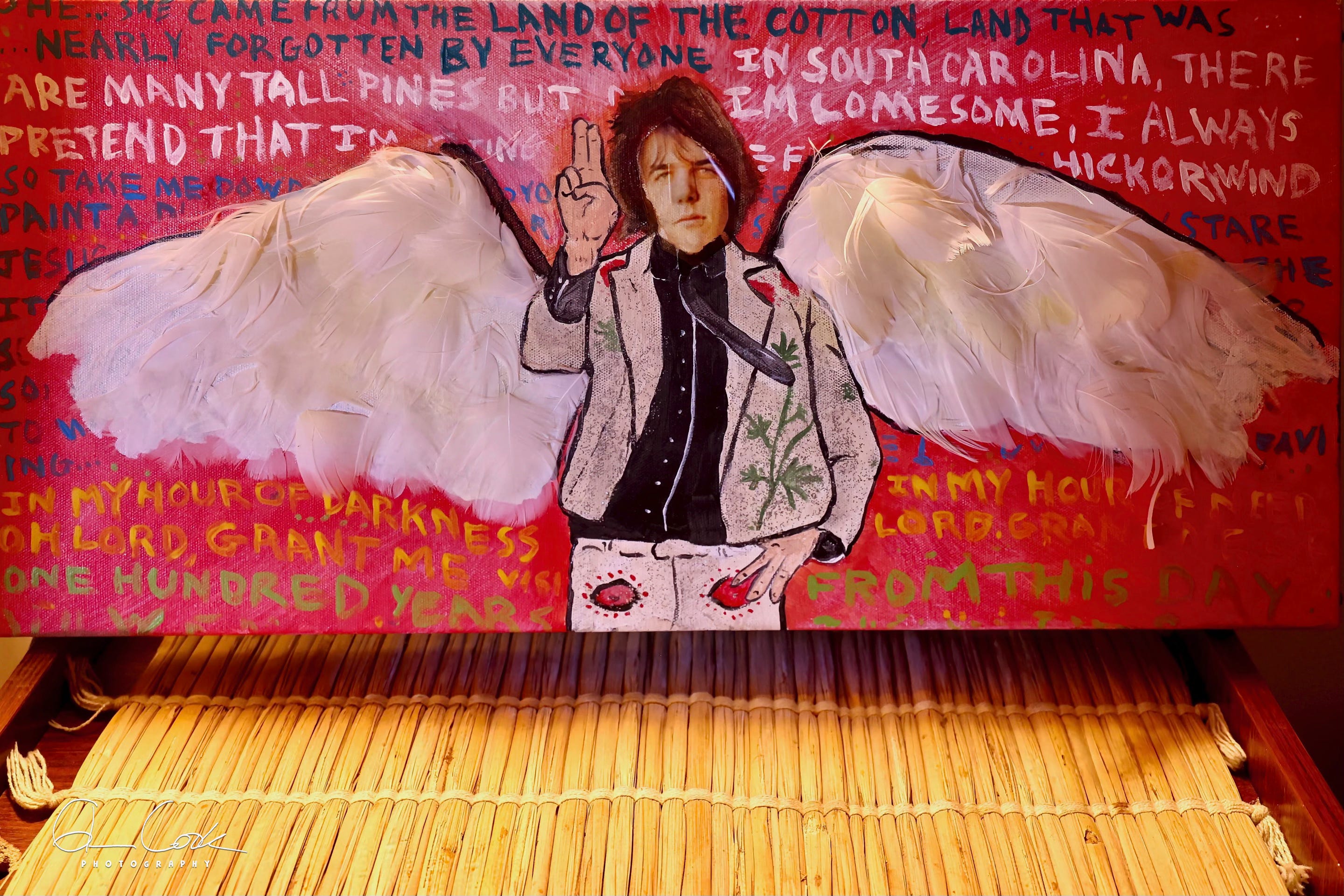
Given my appreciation for Elvis Presley, it’s reasonable to conclude that “Viva Las Vegas” would run on an endless loop every time I venture into the “bright light city.” But Vegas has never set my soul on fire.
If anything, I walk away from it with a collective “meh,” having made my $20 to $40 donation to keep the casinos in business while humming Gram Parsons’ “Ooh Las Vegas” the entire time.
“Ooh, Las Vegas, ain't no place for a poor boy like me.
Ooh, Las Vegas, ain't no place for a poor boy like me.
Every time I hit your crystal city,
You know you're gonna make a wreck out of me.”
Earlier this week, the headline of my Las Vegas visual story was a nod to Parsons’ song, which describes the different ways the narrator loses at the tables. It also alludes to alcoholism and drug use, two things Parsons knew all too well long before writing and recording the song with Emmylou Harris, his duet partner on his two solo records.

“Ooh Las Vegas” appears on “Grievous Angel,” the posthumous 1974 album released one week after I turned 9. Parsons had died four months before, six weeks shy of joining the 27 Club.
Road Trip
On Sunday, I left Las Vegas for California, where I’m shooting a conference this weekend. It didn’t make sense to fly cross country and then back three days later, so I’ve spent time visiting friends, driving around, and (what else?) taking pictures. It has been a lovely, restorative break.
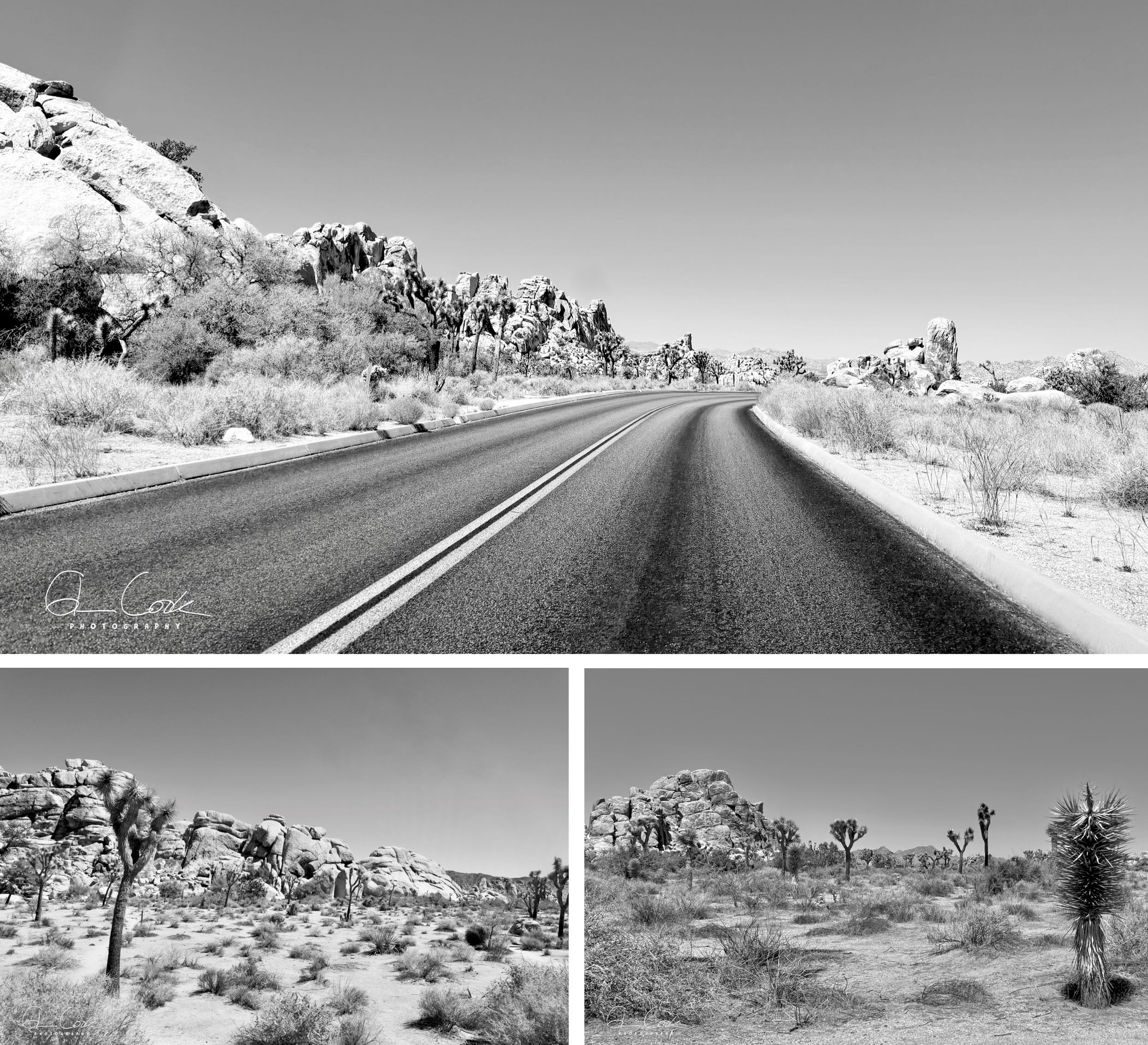
I decided to visit Joshua Tree National Park, a place I’ve long wanted to photograph, knowing the desert had long served as inspiration for creatives. Three hours southwest of Vegas and two hours east of Los Angeles, it’s always been too far to go on a day trip, and because previous West Coast travel has been on tight deadlines for business reasons, I’ve never had the opportunity (or time) to go.
After shooting Monday’s sunset on the Indio side of the park, 40 miles from the town of Joshua Tree, I returned to the same place for sunrise the next morning. My objective was simple — spend as much time photographing the desert landscapes and the various terrain in the massive park.
I had two additional goals:
See if the park made any reference to Parsons. (It didn’t.)
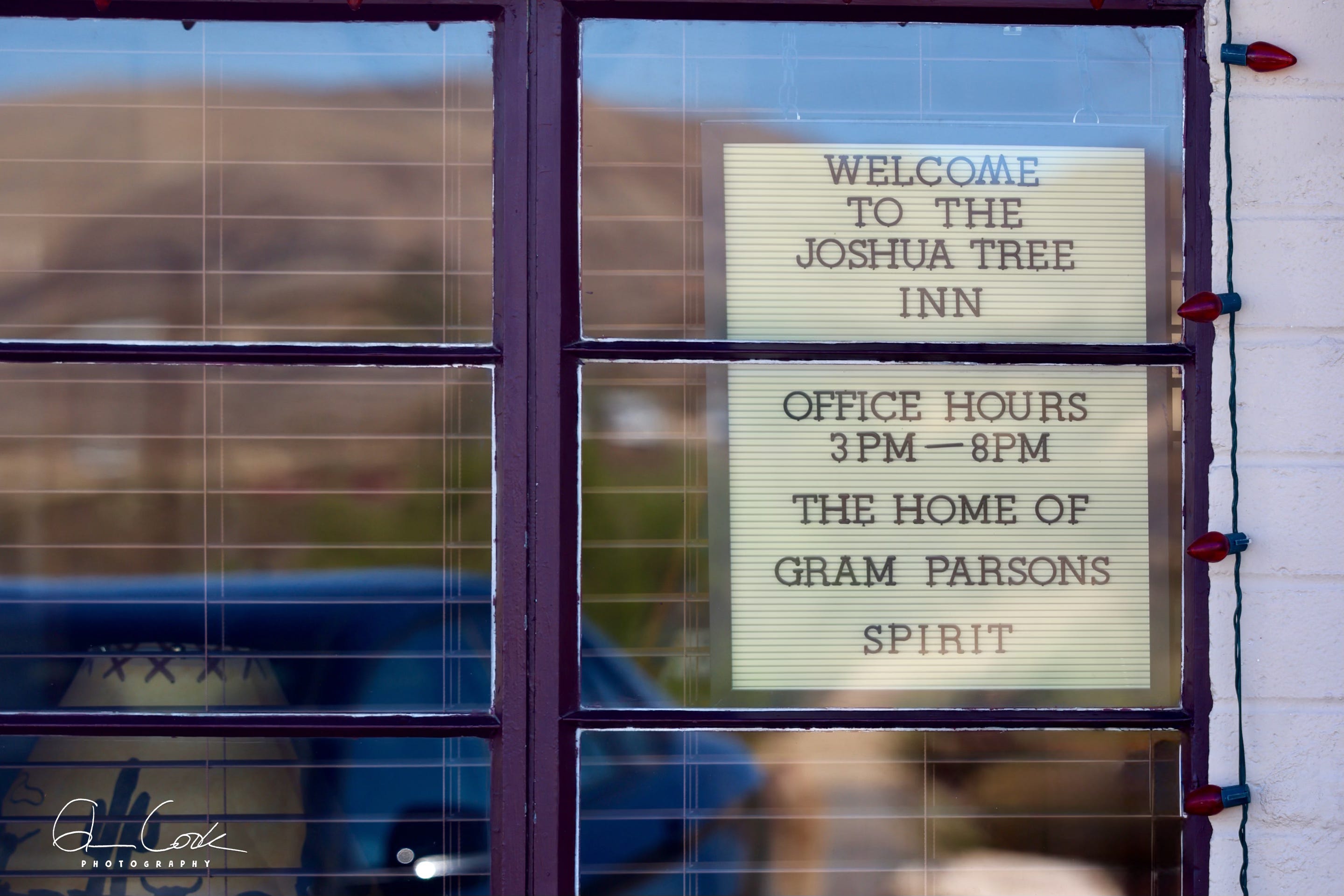
Check out the place where he died — the Joshua Tree Inn. (I did.)
Learning ‘Cosmic American Music’
For years, Parsons was an enigma to me, a young drug casualty whose worlds were connected to or had collided with some of my favorite bands and musicians. While commercial success eluded him, his name was mentioned whenever stories were written about “country rock” or, more specifically, the “alt-country” I grew to love for its gumbo-style approach to genres.
During my immersive late 1980s dive into America’s 20th century music history — albeit an informal one spent reading liner notes and any books or magazines I could find — I learned of Parsons’ deep love for Presley, who he had seen live at age 9 in 1956. (Members of Elvis’ TCB band later backed up Parsons on his solo efforts — 1973’s “GP” and “Grievous Angel.”)
I also read of Parsons’ influence on the country sides of “Sticky Fingers” and “Exile on Main Street,” my favorite early 1970s era Rolling Stones music. Apparently, when it came to substance, Parsons and Keith Richards “influenced” each other during this hedonistic period, so much so that Richards allegedly told Parsons to slow down.
Most of my early exposure to Parsons’ work came from Harris, who covered the majority of his best songs on her albums — “Hickory Wind,” “Hot Burrito No. 2,” the stunning “In My Hour of Darkness,” “Luxury Liner,” and “Sin City” — and paid tribute to him with her classic “Boulder to Birmingham.”
Locating Parsons’ recordings proved difficult, however. His vocals had been cut from all but three songs on 1969’s “Sweethearts of the Rodeo,” The Byrds’ album that was the first to be widely labeled as country rock. (They later would be restored on an expanded 40th anniversary edition of the album.)
At the time, it also was tough to find “The Gilded Palace of Sin” or “Burrito Deluxe,” the two records he recorded with The Flying Burrito Brothers. The solo albums and another posthumous compilation (“Sleepless Nights”) were available on CD — I no longer had a turntable — but sounded like they had been produced in a blender.
It wasn’t until 1999, when Harris co-produced the tribute album “Return of the Grievous Angel,” that I felt the full impact of his vision for “Cosmic American Music.” Subsequent releases of his catalogue, remastered along with outtakes, only confirmed how deeply his music and sound had influenced my life.
Then, on Tuesday afternoon, I found myself standing outside the room where Parsons died.
Often Told Background
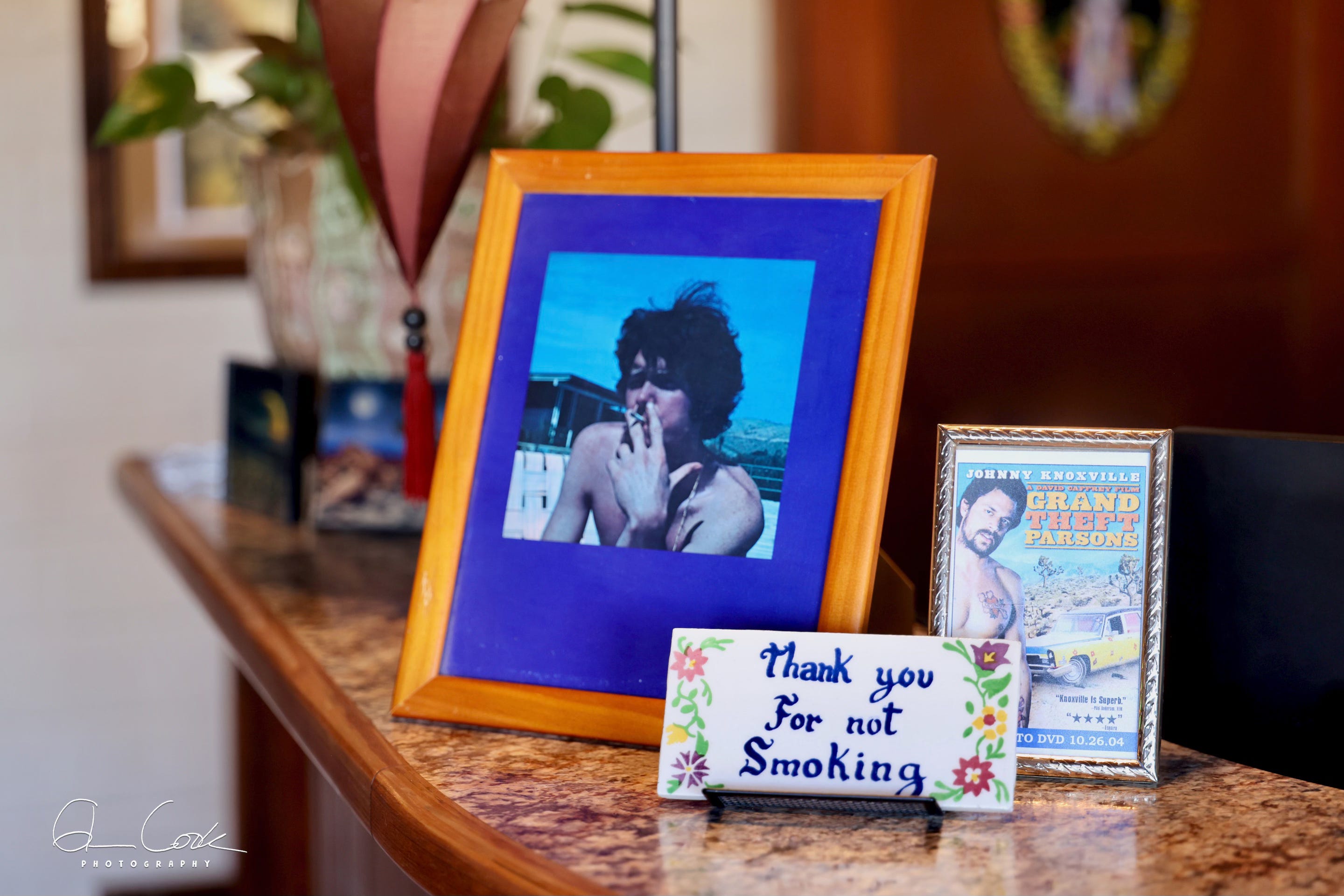
A bit of additional background is necessary, even though the story is so infamous that it inspired a 2003 movie (“Grand Theft Parsons” starring Johnny Knoxville) and has been featured in seemingly every story ever written about Parsons.
After “Grievious Angel” was completed, Parsons went to visit Joshua Tree, which was a national monument at the time. (It became a national park in 1994.) Like other musicians, Parsons had long had a deep connection to the park where the Mojave and Colorado Deserts converge.
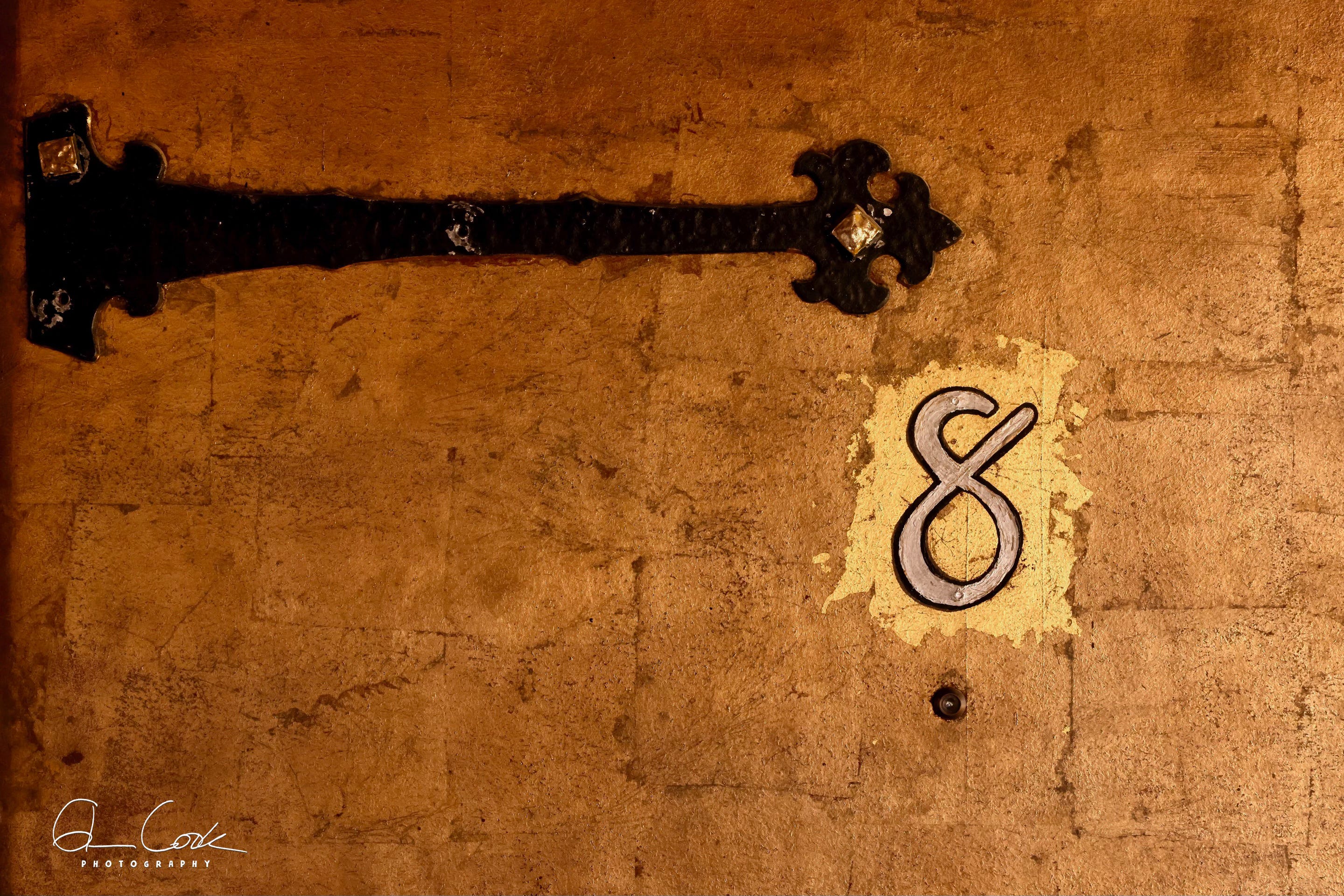
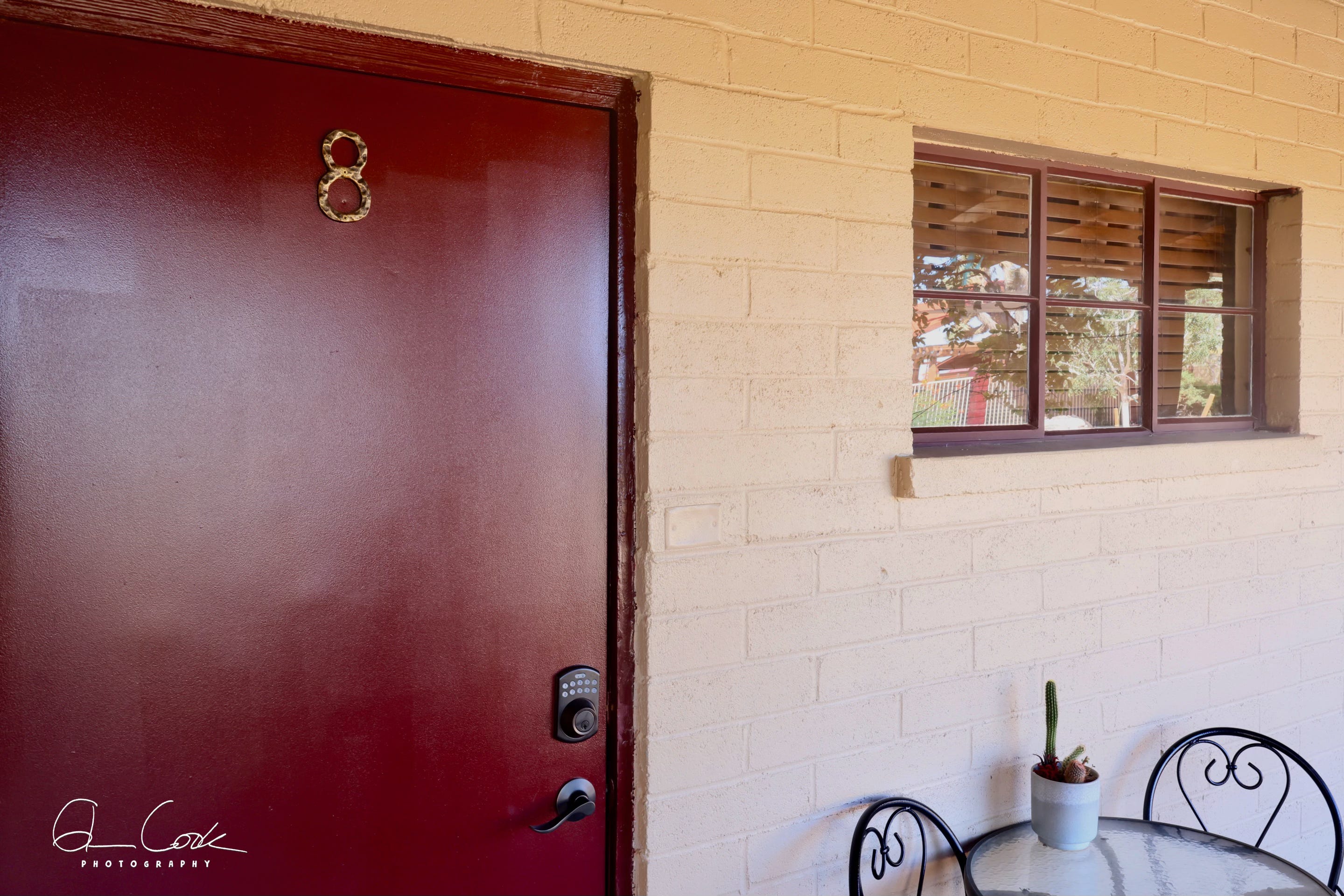
Accompanied by his girlfriend and two others, the four spent the day drinking before moving the party to the Joshua Tree Inn, where more mischief ensued. In Room No. 2, Parsons overdosed on a combination of alcohol and morphine and was taken to Room No. 8, where he died sometime after midnight on September 19, 1973.
Phil Kaufman, Parsons’ friend and tour manager, “rescued” the body from LAX and set it on fire in the Joshua Tree park’s Cap Rock section. Apparently, Parsons had told Kaufman of his desire to be “buried in the desert,” but the attempted cremation was unsuccessful. Parsons’ charred remains were found and buried at the Garden of Memories in Metairie, outside New Orleans.
I drove around the Cap Rock area, stopping at the median next to the parking lot where the coffin was left, but saw none of the signs or trinkets that fans often leave behind. The makeshift memorials are cleaned up by park workers who try to preserve the natural landscape.
Driving into the town of Joshua Tree, I went to the park’s visitor center. No references to Parsons there, and only a small picture in a saloon where I grabbed lunch and a beer.
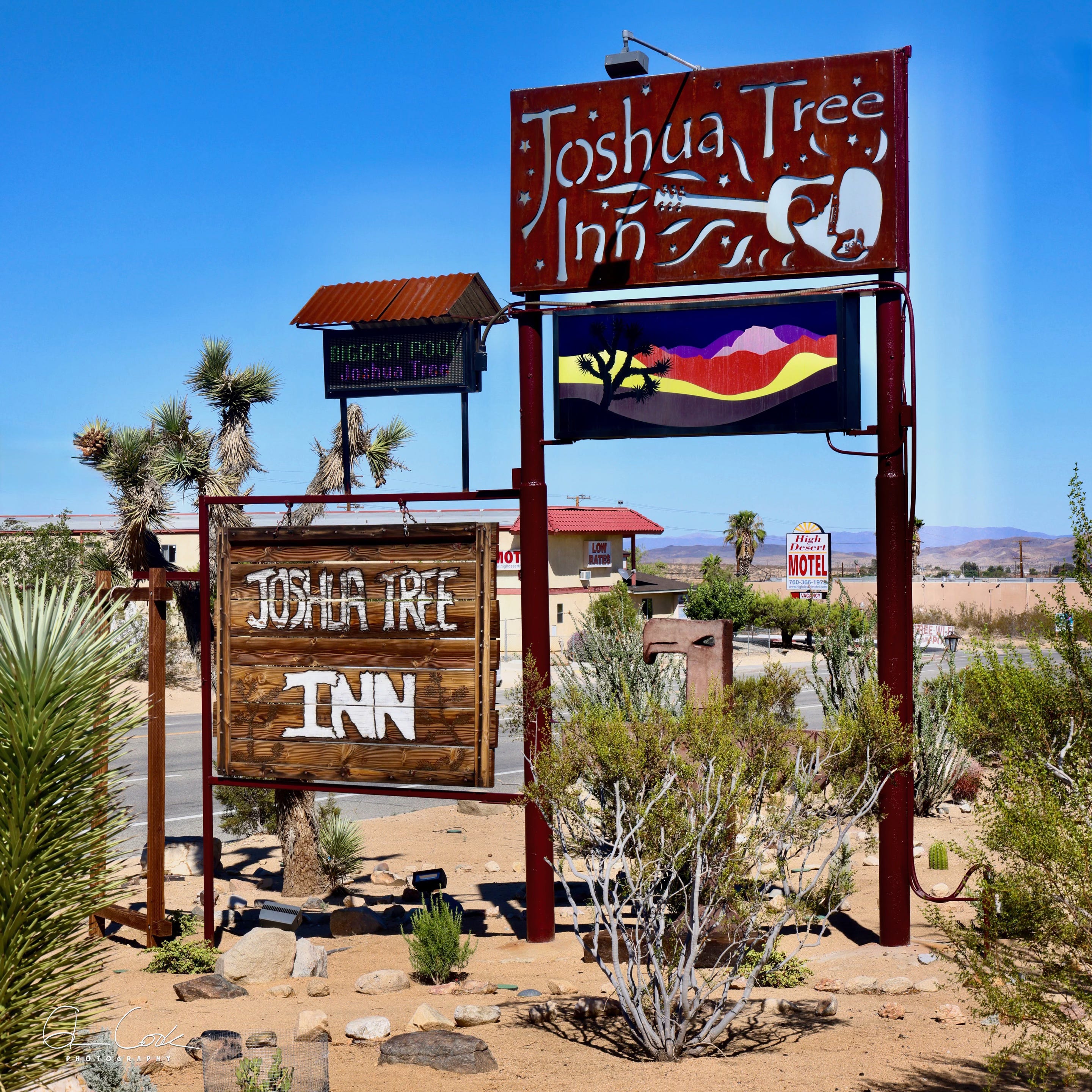
I then drove to the Inn, a roadside motel located on the Twentynine Palms Highway. Built in the 1950s, office hours at the small Spanish style motel — 11 rooms with a small courtyard — are from 3 to 8 p.m. daily. I arrived at 2:15 and decided to try my luck.
“Come on in,” an affable young man named Justin said as I jiggled the door. “We’re not open yet, but it’s your lucky day.”
Visiting the Shrine
Justin has worked at the inn for eight years. His wife Dee Dee, the general manager, has been there for 15. Both were hired by Margo Paolucci, who had purchased the hotel in 2002 and turned it into the shrine for Parsons’ superfans who visit from all over the world. Musicians stay there too; Donovan, the folk-rock singer, is a frequent guest with a room named after him. Others, including Grace Potter, Kacey Musgraves, Robert Plant and even Harris, also have stayed overnight, Justin said.
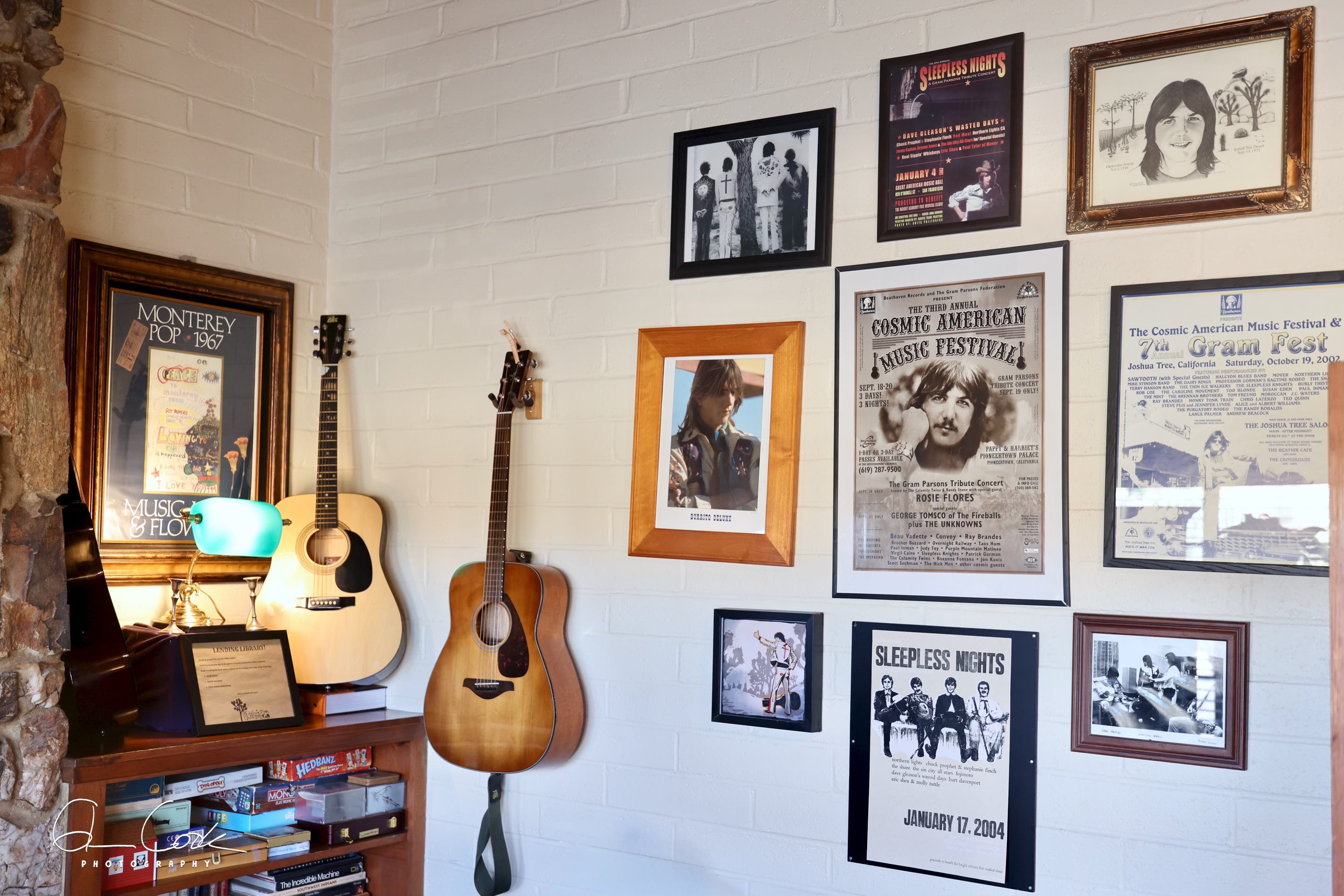
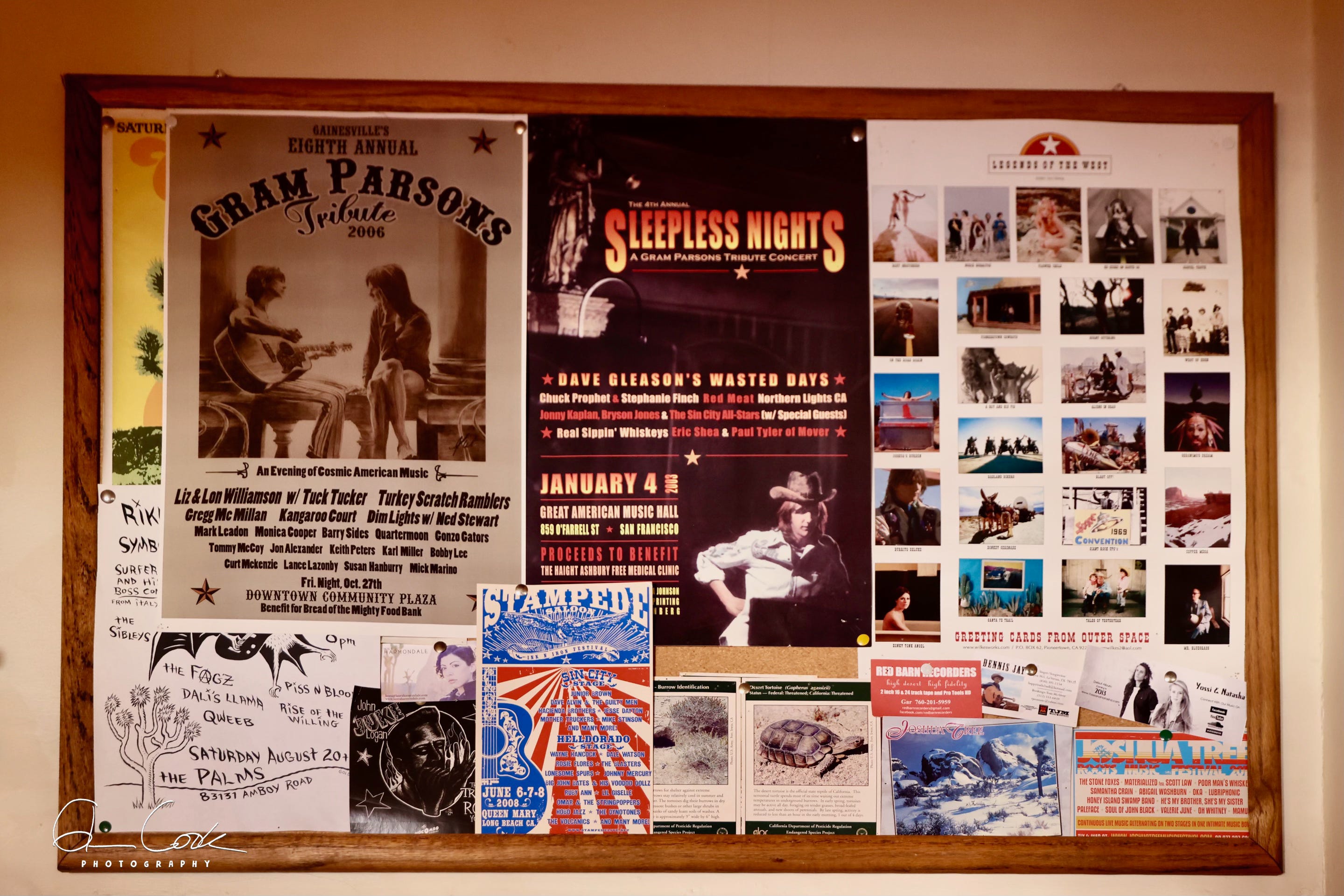
Previous owners tried to downplay the connection to Parsons’ death, Justin said, noting the inn was used as a group home for at-risk youth at one point. Paolucci, who died last year, took the opposite approach. Posters and pictures now adorn the lobby walls, along with fan art and messages in a small room off the lobby.
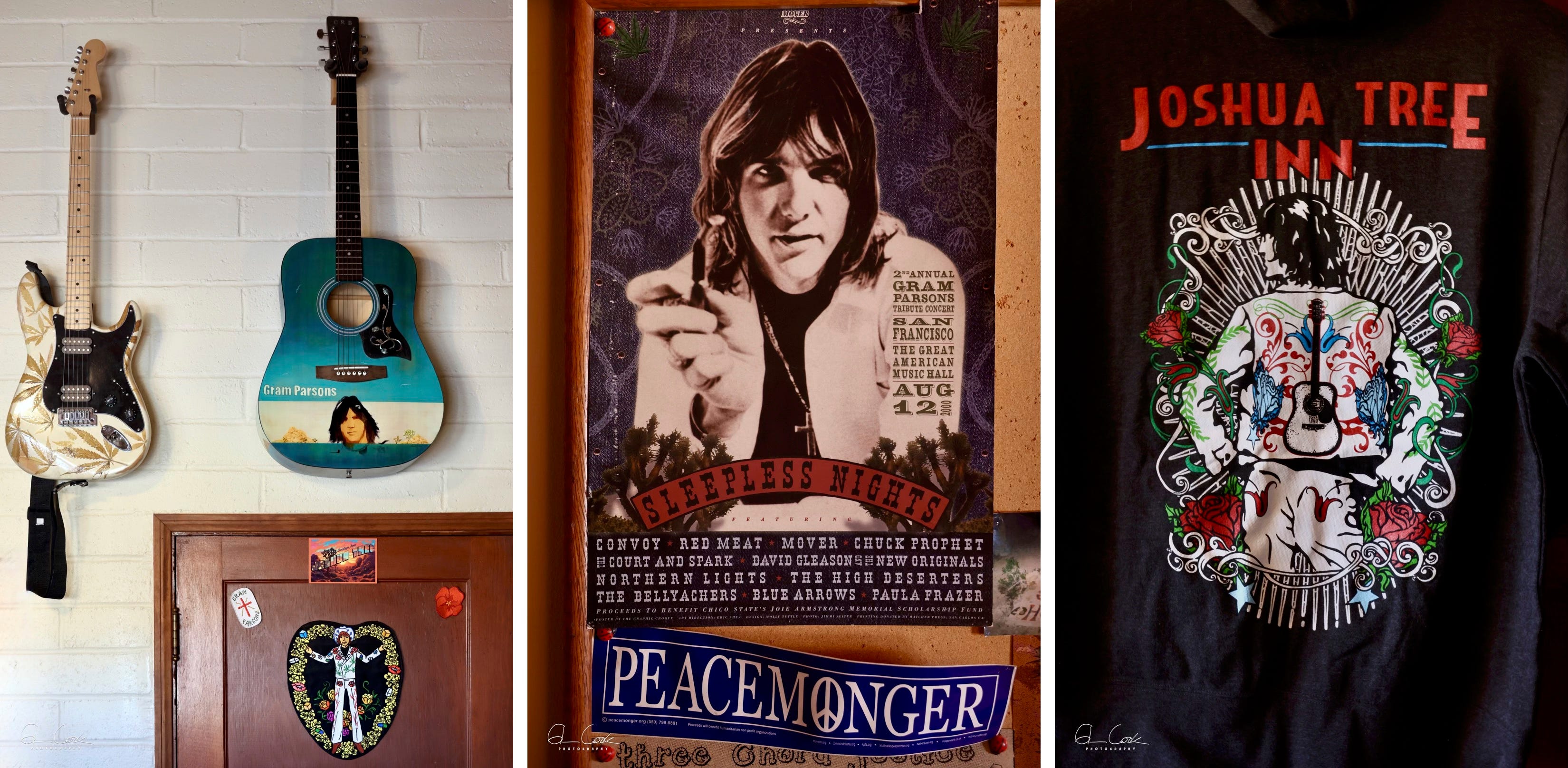
I couldn’t go into Room No. 8 because guests were about to check in, Justin said. (Reservations for the room, which costs $178 a night with a two-night minimum, are booked three months in advance on weekdays and six months in advance on weekends.)
“But you can walk around and take pictures,” Justin said. “Go back and see the shrine.”
“Streets of Baltimore” was playing in the front part of the building as I took pictures in the lobby and the small room that leads to the three-table dining hall. Walking down the corridor that opens into a small courtyard, I checked the numbers of the rooms I passed. I had read that Room No. 8 is haunted; Parsons’ spirit is rumored to roam around the grounds.
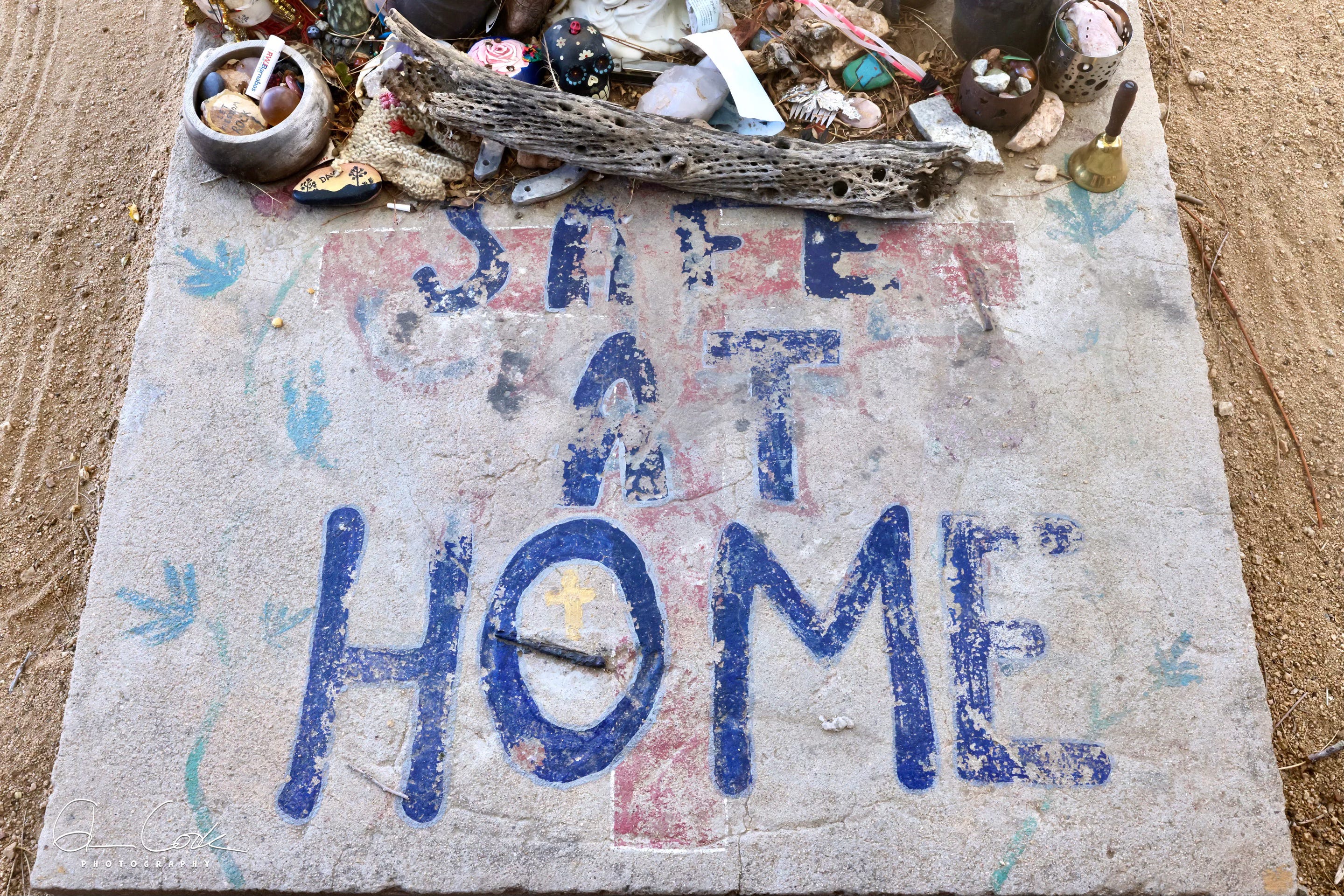
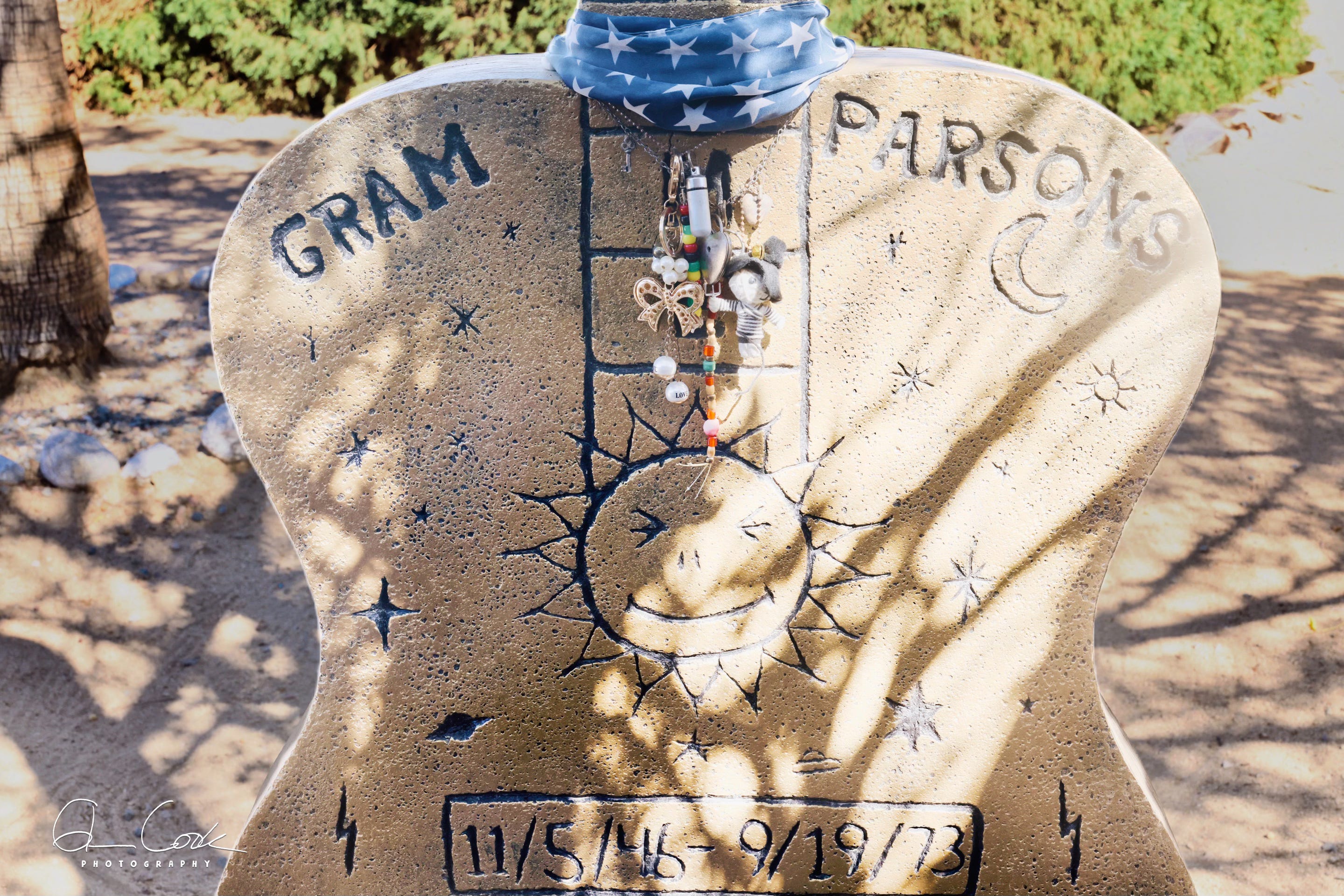
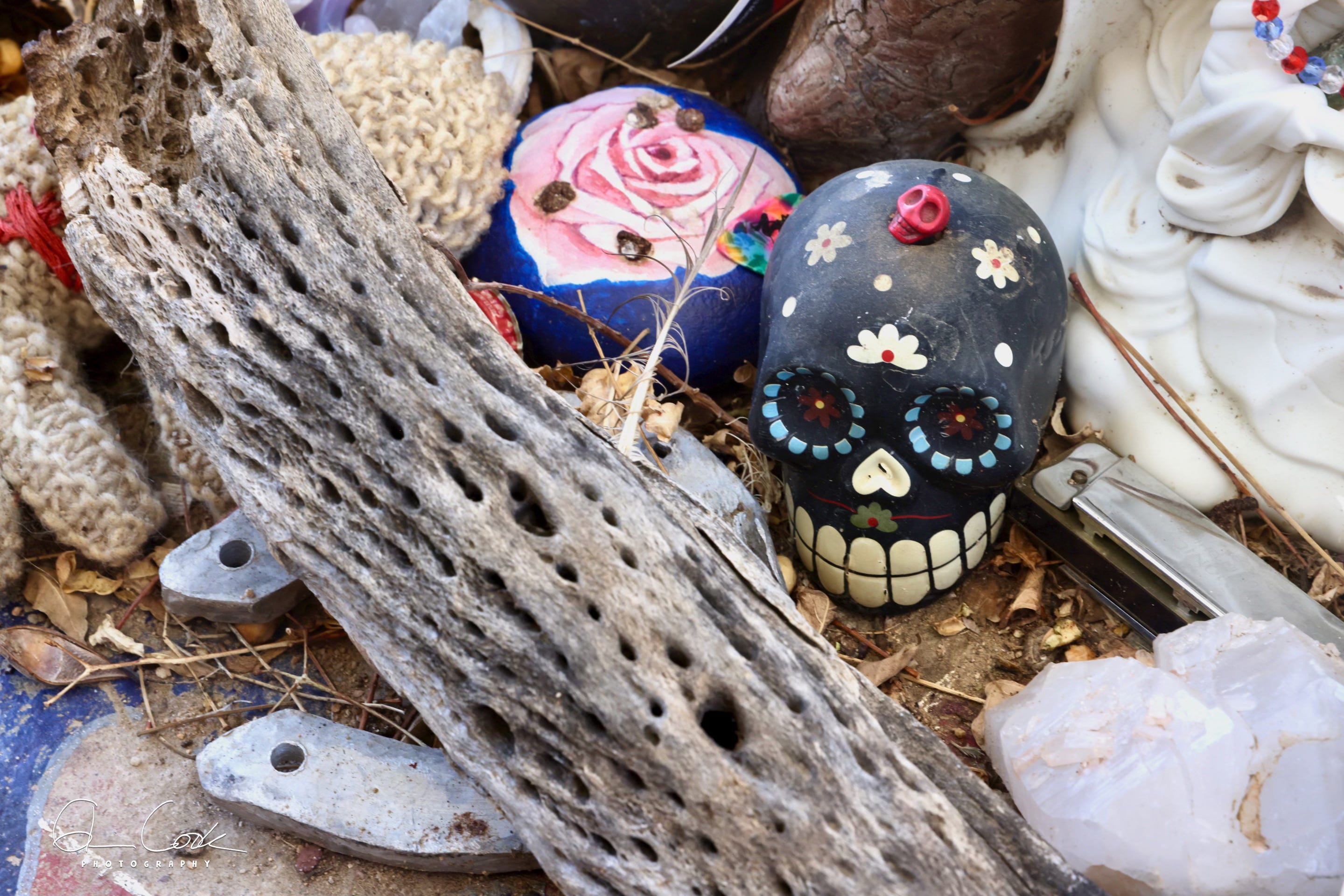
The room’s original door now hangs on the sidewalk outside, painted a flecked gold and providing shade to the chair next to it. The memorial includes a large stone guitar and a concrete slab with “Safe at Home” painted on it that was salvaged from the park. A few trinkets had been left behind at the memorial’s base; Justin said those will become more numerous when the anniversary of Parsons’ death is observed next weekend.
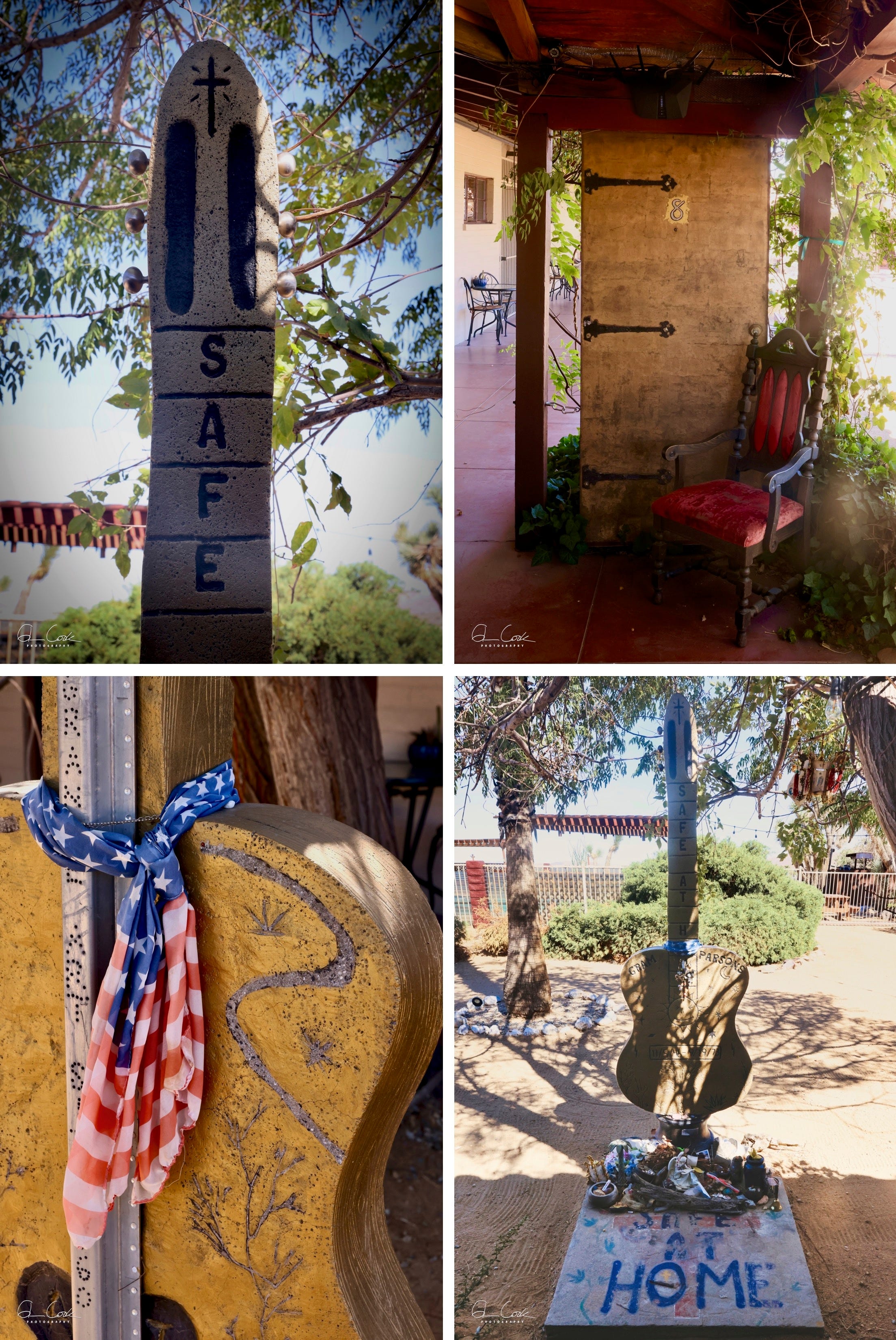
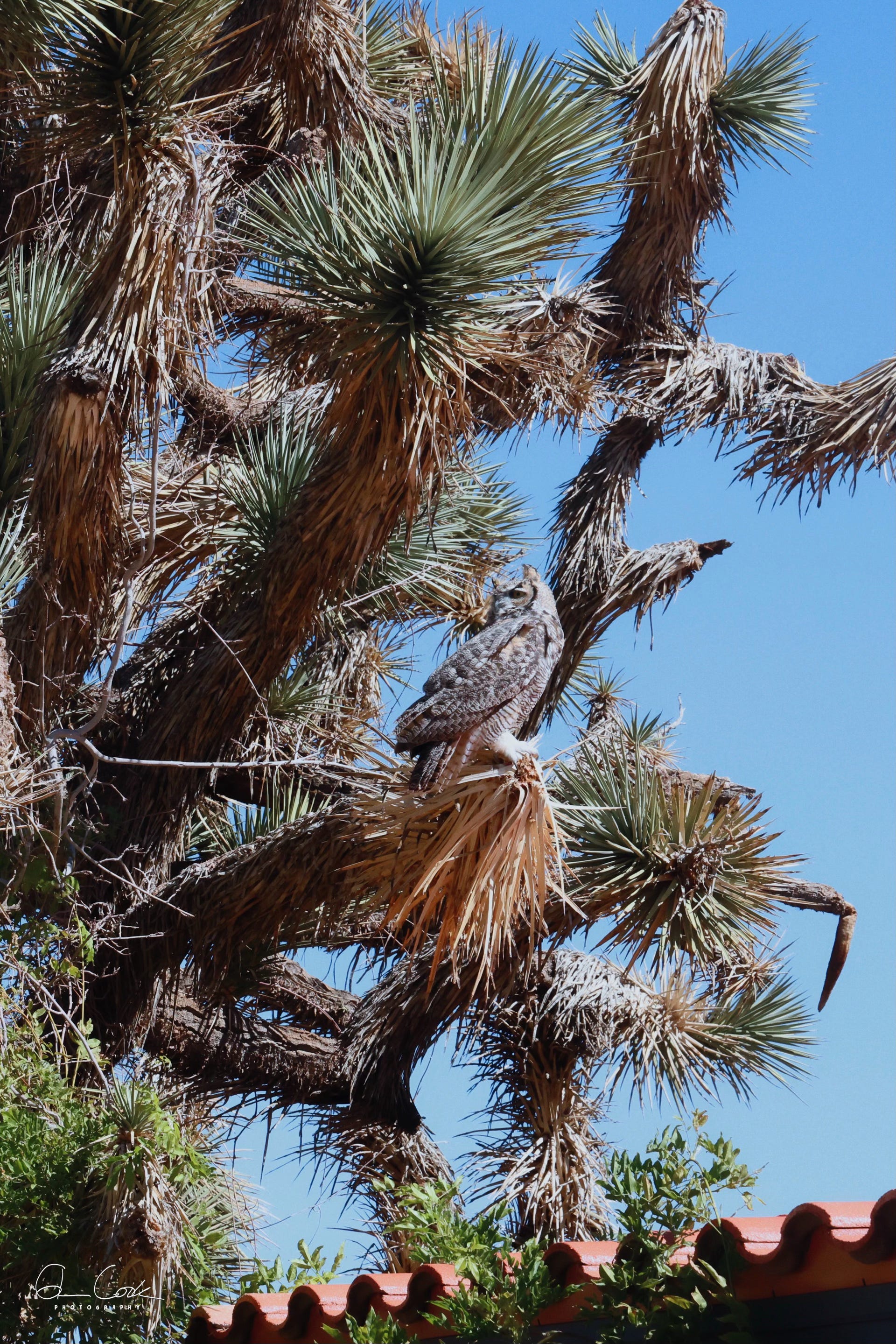
Standing under a tree, taking pictures of the backlit memorial, I was startled by a loud peculiar noise and commotion overhead. A great horned owl that apparently had been sleeping in the tree above Room No. 8 was lumbering over to another tree.
Owls often are viewed as messengers from the spirit world. I took a picture of the owl, which did not look happy as it perched in the other tree, and wondered if Parsons’ spirit was trying to tell me something.
“That’s strange,” Justin said as I returned to the lobby. “It’s rare to see them during the day.”
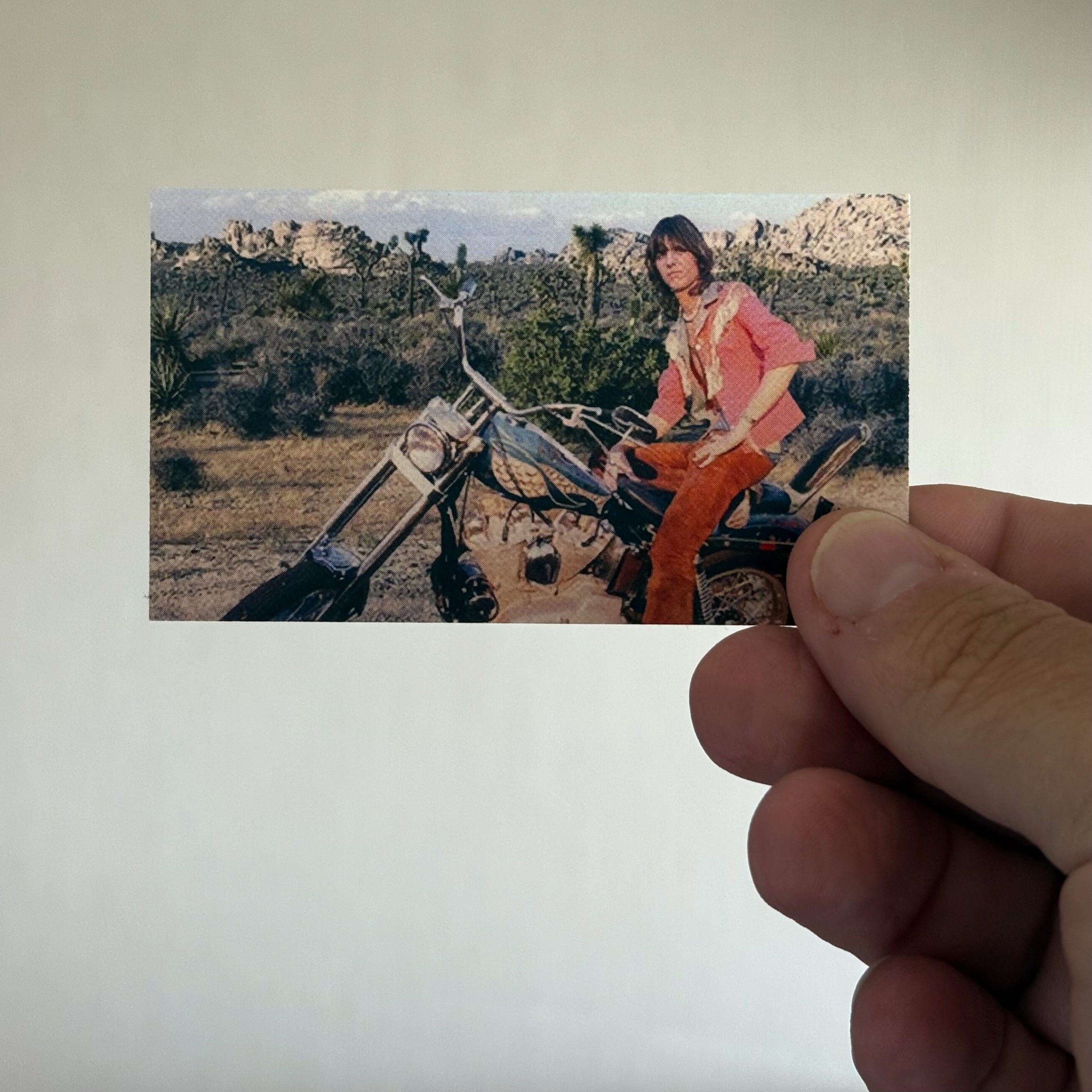
At that point, the guests who were staying in Room No. 8 arrived. One spoke in a heavy British accent. Justin gave me a business card, which has a photo of Parsons at Joshua Tree on the back.
“Consider this a souvenir,” he said. “Something to remember your trip by.”
Don’t worry. I won’t forget this one.
More Photos
This is brilliant! Thank you for letting me know about this post. 🎸🤘👊
I hate when people link in others posts so I wouldn’t. I wrote a small piece about Burrito Brothers a bit ago.
Great memories!
Wow. The owl gave me the shivers.